Costa Rica Blog – #1
The midnight oil didn’t just burn for our team of travelers; it practically fueled the launch of our journey. The Natural History of Costa Rica field course finally transitioned from a Dr. Delis’ syllabus to a reality.
After meeting at 8:00 p.m., packing the van, and ensuring everyone had their passports, the expedition officially kicked off with a road trip first to Dulles Airport in Washington, D.C.. Nine college students and four co-leaders strategically crammed insect repellent, hiking boots, rain gear, and field notebooks into every square inch of space.
There is a unique energy that exists when a group of students and faculty assemble on the eve of international fieldwork. It is a mix of nervous anticipation, excitement, and the faint awareness that regular sleep schedules are about to become a luxury of the past.
Once the van was packed, Dr. Delis expertly drove through the winding roads of Virginia on the way to Dulles (if you have never driven 15 down to the airport, you should at some point). We made our way to the airport to catch a 2:00 a.m. departure on Copa Airlines. Navigating an international terminal in the dead of night requires a specific kind of collective focus, but our students handled the transition with the adaptable mindset crucial for fieldwork. The red-eye flight took us first to Panama City, offering a stunning bird’s-eye view of the canal zone as the dawn broke, before a quick connection brought us into our final destination: San José, Costa Rica.
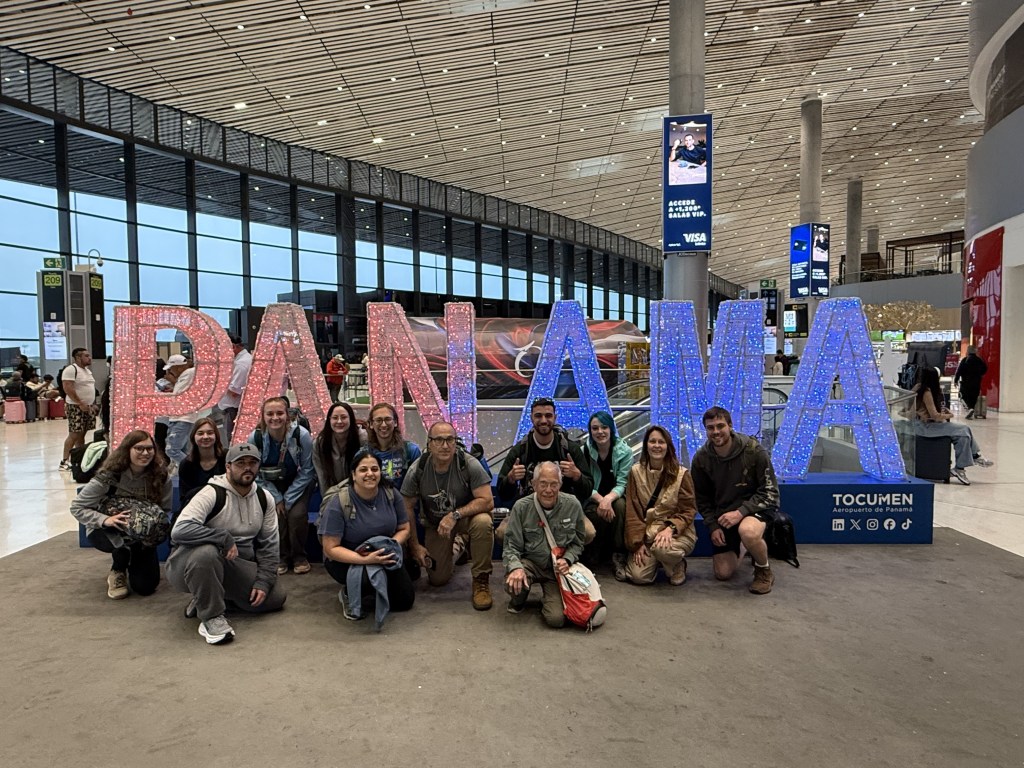
Stepping off the plane at SJO Airport, the crisp, tropical morning air immediately signaled that we had entered a completely different ecological realm (but it was not nearly as warm as it should be in my mind). After clearing customs, sorting out group gear, and catching our breath, we made our way into the heart of San José. The city serves as the perfect initial staging ground, a vibrant urban center nestled within the mid-elevation Central Valley, surrounded by dramatic volcanic peaks that hint at the complex geology we will be studying in the days to come.
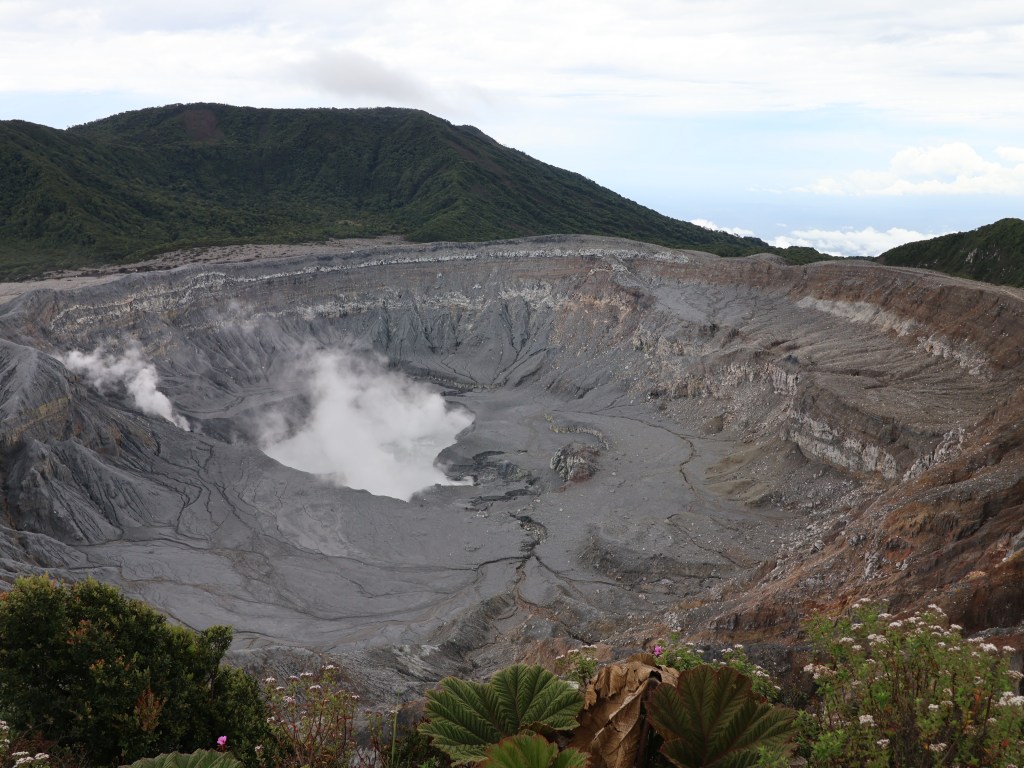
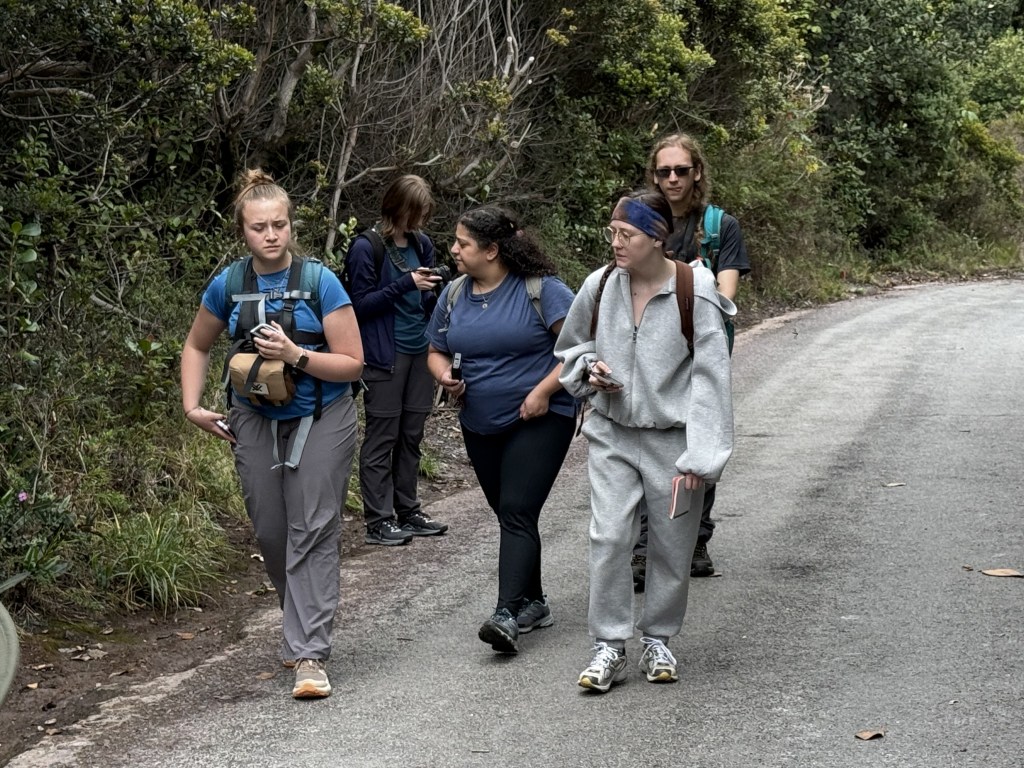
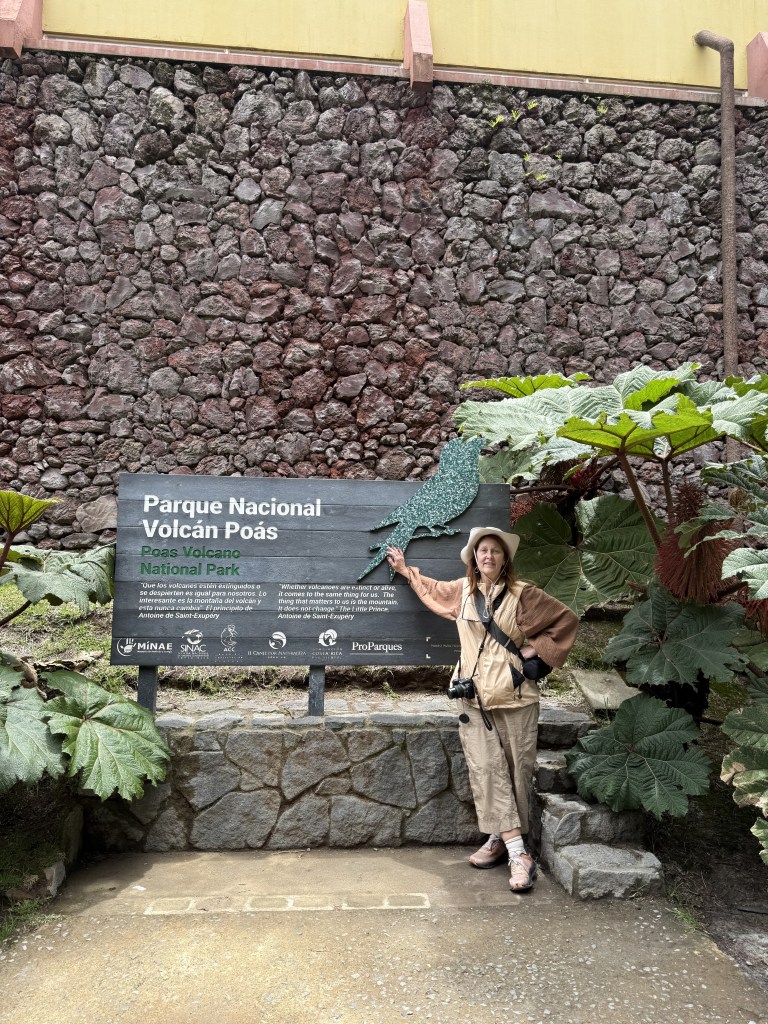
Instead of crashing from the long hours of travel, the adventure started and the group hit the ground running. We spent the afternoon exploring Volcan Poas where a hike to the active (but not erupting) volcano allowed for the sighting of birds, a few small mammals, and many many different plants that we do not have back in Pennsylvania. For a natural history course, observation starts the moment you land, and the students were already tuning their eyes to the different locale we had arrived at, as it is definitely different than Shippensburg.
As the afternoon wrapped up, we checked into our first lodging – the Hotel Honey Bee which is a beautiful B&B with wonderful hosts – Lu and Anna. Dinner was amazing. we gathered for our official trip orientation. Sitting together as a full cohort, we provided information on logistics, academics, and expectations for the upcoming day.
We discussed field safety, the unique ecosystems we are set to explore, and the expectations for daily field journaling and active observation. It was a moment to ground ourselves, transition into a scientific mindset, and set the collaborative tone that will define our shared research community.
With the travel logistics behind us and the orientation complete, the true adventure has begun. The journey here was not quite planes, trains, and automobiles, but fairly close.
Looking around at this dedicated group of future field scientists, it is clear that every hour of lost sleep was entirely worth it.
Trip Checklist Status:
- D.C. Departure & Van Loading: Completed ✓
- Copa Airlines Transit (via Panama): Completed ✓
- Volcan Poas Exploration: Completed ✓
- Course Orientation: Completed ✓
 Learning, Lessons, and Living