“And I think to myself – what a wonderful world.” — Louis Armstrong
I have learned that there are two calendars in Egypt (and likely other parts of the world).
There is the one on my phone, which is the tidy, predictable calendar that lives inside Outlook, filled with workshops, co-teaching meetings, and reminders that I am absolutely convinced I scheduled at a very reasonable hour. And then there is the other calendar that started last week, the one everyone actually lives by, and the one that influences the rest of the day and week. It is not measured in weeks, syllabi, or semesters.
It is measured in the events and times relevant to Ramadan.
I knew Ramadan was coming long before anyone told me. I have friends throughout the world who are Muslim. Be even beyond knowing them, the city told me first.
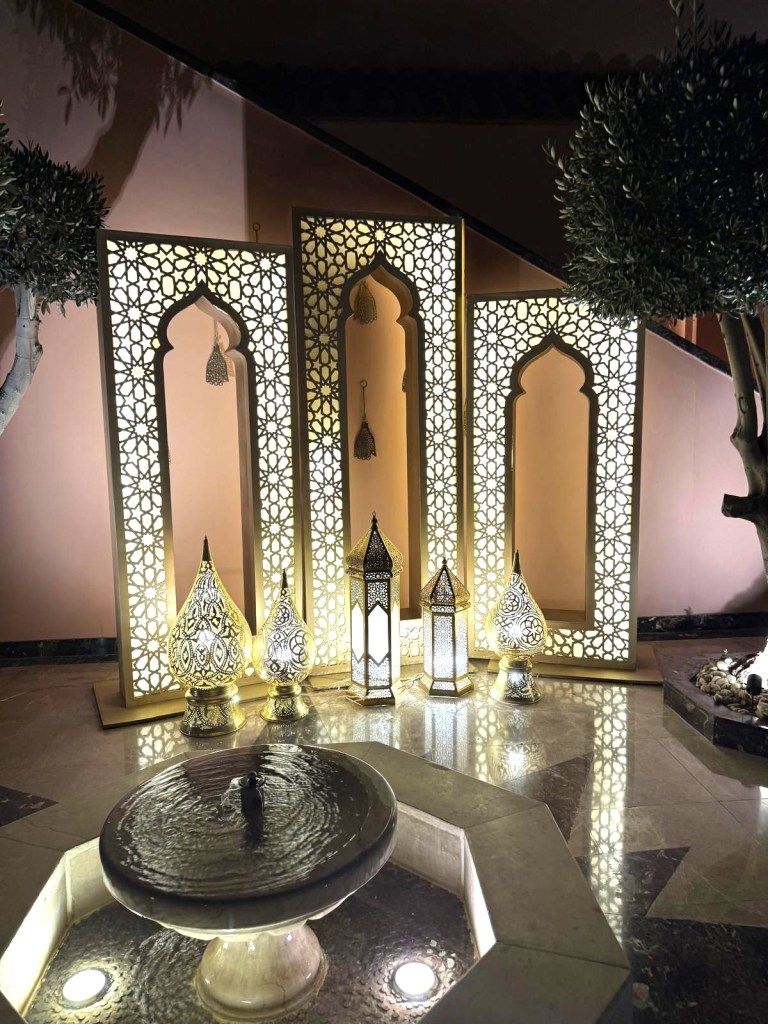
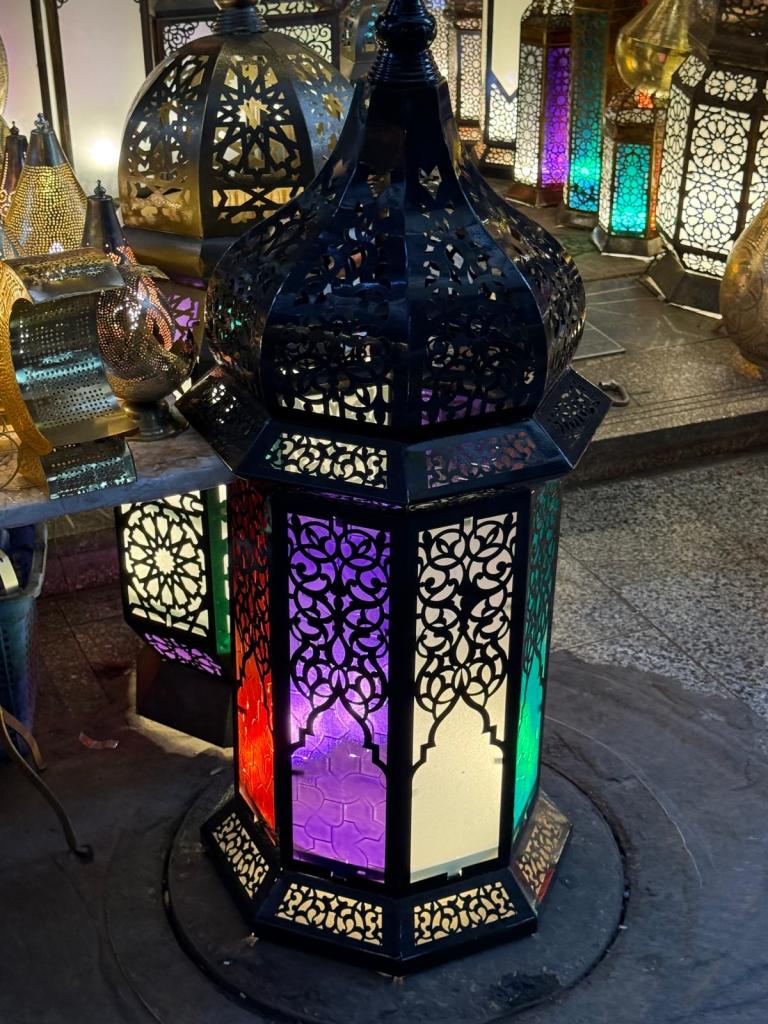
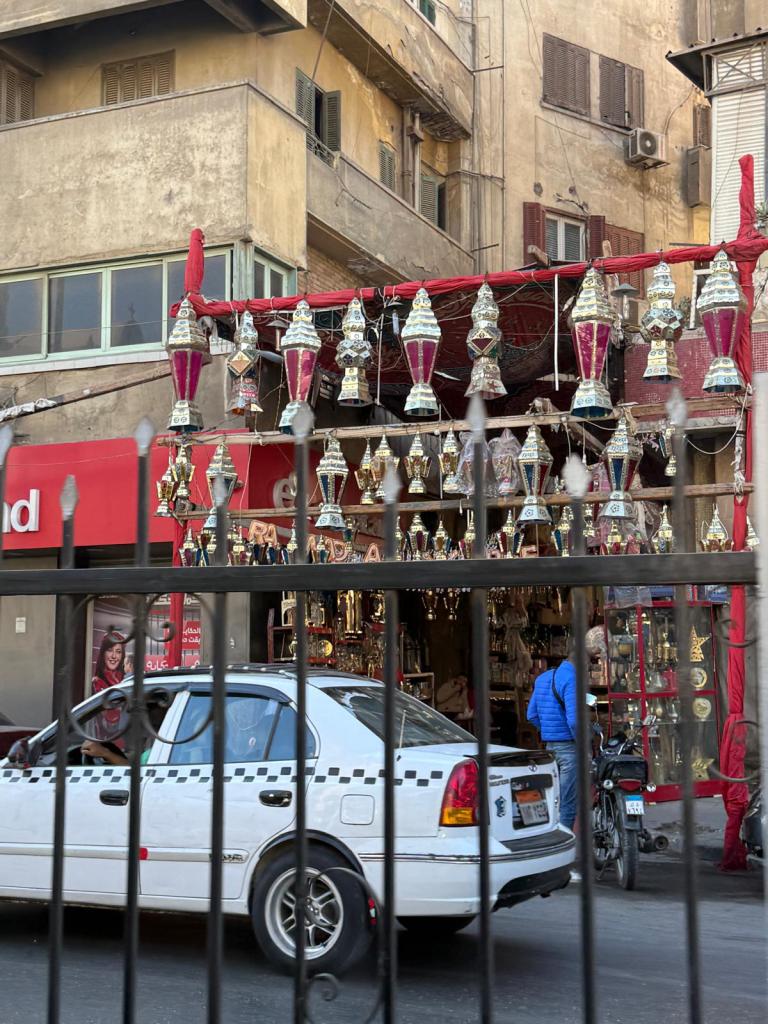
Within a day or so of arriving, the street outside of my flat went from NO streamers and flags to daily additions. When looking down most side streets, they all began to subtly reorganize themselves. Lights appeared (like what many US cities do for hanging Christmas lights). These lights are not quite festival lights, but something softer and warmer. Small lanterns (in Arabic – Fah-noos) started hanging across alleyways and storefronts. Entire buildings gained strings of colored bulbs overnight, as if the architecture itself was preparing.
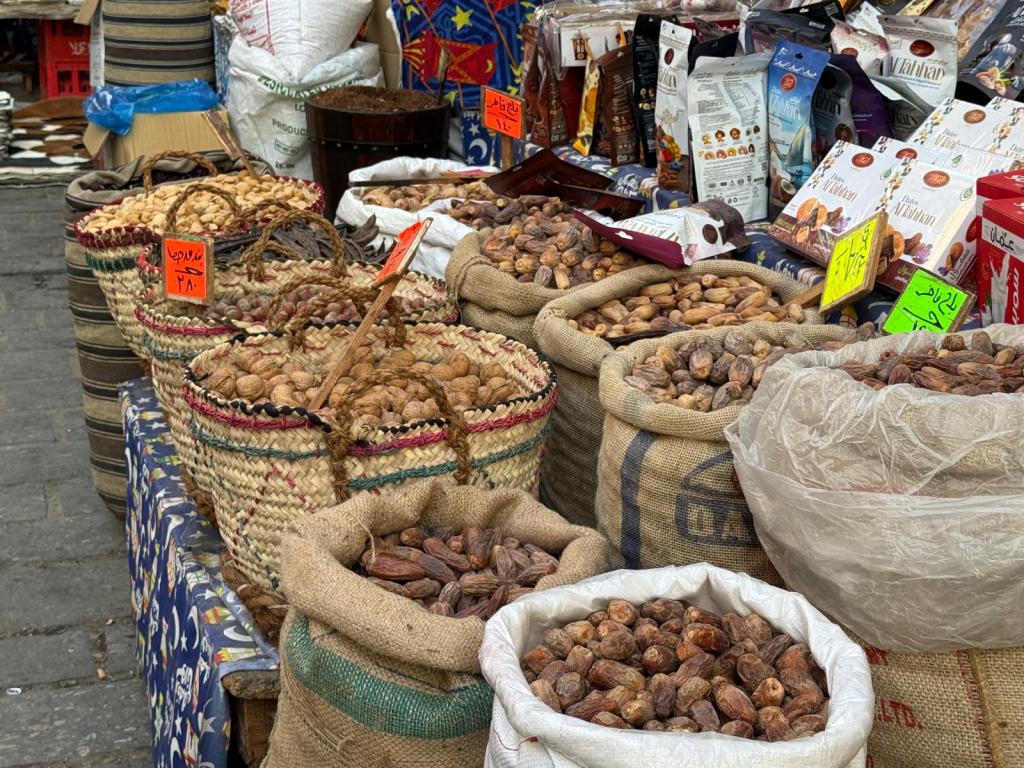
The grocery store changed, too. Shelves shifted. Suddenly, dates were everywhere. Not a display but rather an entire section. Boxes stacked high, with many different displays of dried fruit that, within the US, would likely be in one small section of the store, were everywhere including outdoor markets. Here, they are a foundational food group especially for Iftar, which is the breaking of the fast at the end of the day.
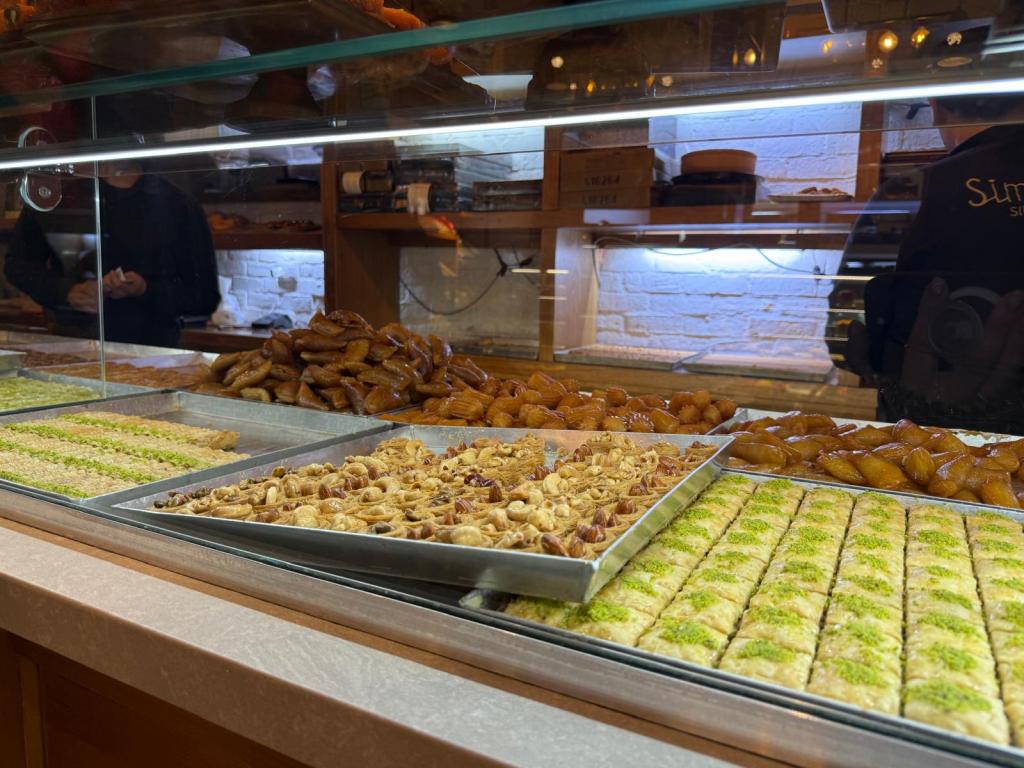
And the bakeries.
The bakeries became… serious. I walked into one near my apartment and realized I was not witnessing a casual dessert purchase. I was observing preparation. Trays of kunafa the size of coffee tables. Containers of qatayef are stacked and ready for purchase. This was not snack food. This was infrastructure.
Ramadan, I am learning, is not simply a religious observance. It is a city-wide shift in daily rhythm. I knew this conceptually, but living it in actuality is very different.
And my own schedule has been considerably less organized, requiring shifts to different times, such as shortened class times for students fasting. Uber drivers are less available once sunset occurs, as they too are breaking their fast and eating for the first time since dawn. An interesting start, and I am sure that I will share more about Ramadan in the next few blogs, as it lasts for a month and there is still much more to experience.
The Amazon Bell
In the United States, I rarely think about delivery logistics. You order something, and eventually a box appears. Delivery is an interaction.
I ordered a few things I thought were practical and needed, such as a USB-to-Ethernet adapter (we’ll talk about technology at some point in the future), Coke Zero (a life necessity for me and hard to find in stores), and other things. I placed the orders days ago, well before Ramadan.
Naturally, everything arrived the same day. —Not together. —Separately. —Within two hours.
At points, the delivery involved a phone call in rapid Egyptian Arabic, followed by a doorbell, followed by me attempting to remember the appropriate combination of greetings, pins to provide for some deliveries, and wondering what time it was. In one situation, I needed to provide a clearer address, which required me to mentally translate both directions and floors simultaneously.
And the doorbell.
The bell is not a polite notification. It is an announcement. A proclamation. A decisive statement: You have a package. But I get ahead of myself. As I asked my tutor (who I am very grateful to, as he continually makes me practice things like which floor I live on and which apartment), do all deliveries have someone ring the bell at 9:00 p.m? He said yes, Christine, why do they not do that in the US? To which my response was, ahhh, no –the Amazon or UPS truck slows down enough to toss the package onto your porch, and you need to keep going to check to see if it arrived.
The first delivery came around 7:30 p.m. The second arrived 20 minutes later. The third came just as I had successfully resumed my train of thought while writing at about 9:15 p.m.
The delivery driver smiled, handed me the package, and said what I am now certain is a standard phrase, but still sounds to me like a full conversation. I responded confidently in Arabic and immediately realized I had probably just agreed to something.
My Science Brain Is Not Helping
There is a peculiar side effect of being a science educator living in a 22-million-person city: my brain insists on analyzing everything and applying scientific thinking to things.
This is not a new revelation, but one I have come to realize in learning Arabic over the past two years. For example, in Arabic, there are sun letters and moon letters, with the key point that one set changes the sound of the word for “the” before a word. Obviously, it would be the MOON letters – right? The MOON changes regularly – every night. Alas, it isn’t — SUN Letters are the ones that result in this change.
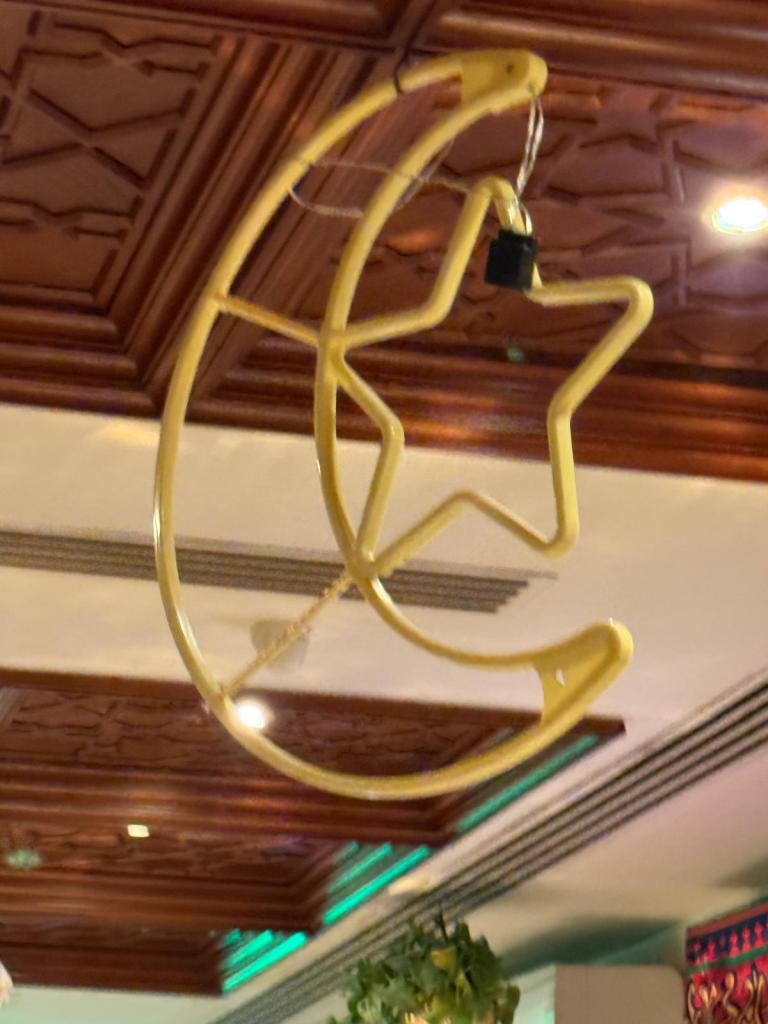
Another example is the sun-earth-moon system. Muslims pray five times per day, with some of the times being sunrise and sunset, which means their prayer times shift by a few minutes due to, well, science. They print calendars with these times for multiple cities, since the location’s latitude also affects the time of prayer. So I had asked at one point why then does everyone wait for the sighting of the crescent moon to know when Ramadan begins? If we understand the sun-earth-moon system, we know when the moon moves from new to sliver and which day that will occur. I had to accept the answer that it is how it is done, and it is important for the actual sighting. Okay – I will accept it. It was also reinforced this year with some countries identifying the start of Ramadan on February 18th and others, including Egypt, announcing it was February 19th.
But back to the actual experience and the issue with my science brain.
I cannot simply ride the transportation. I must understand transportation. Which brings me to my newest set of questions: the National Authority for Tunnels.
I first encountered this sign on a building I passed in the Uber on the way to the University and briefly assumed I had mistranslated something. But no, it is exactly what it sounds like. A government entity dedicated to tunnels. So, my definition of a tunnel, having grown up in Pennsylvania, is something that goes through something else, such as the turnpike tunnels or even perhaps under something, such as the Chesapeake Bay Bridge Tunnel.
I asked (I always do) and was told no – they oversee the underground transportation systems or subways. I have now spent an unreasonable amount of time wondering:
What materials are used for the tunnels in terms of soil composition (largely Limestone) near the floodplain? Why are they called tunnels rather than subways? You get the general idea.
Apparently, I am not capable of commuting casually. Instead, I ride in the Uber, thinking about the random things that pop up and why. This is either a very good thing (lifelong learning, etc.) or an annoying thing, for I have many questions.
In A Way, this is Scranton, Pennsylvania – But Different
There was a moment about a week ago that finally helped me explain my new home to my family.
I was walking through my neighborhood at sunset when I heard the call to prayer from one mosque. Then another. Then another. The sound layered across the city is not synchronized, but overlapping, echoing from multiple directions at once. Also, when taking that Uber ride, it is very evident how many mosques there are – about every two blocks or so.
And suddenly I knew what it reminded me of. —Scranton, Pennsylvania.
I grew up in a place where there was a church on nearly every block. Not metaphorically. Literally. You could navigate by steeples and bell chimes, or in later years, chimes that resembled songs.
Here, you navigate by minarets.
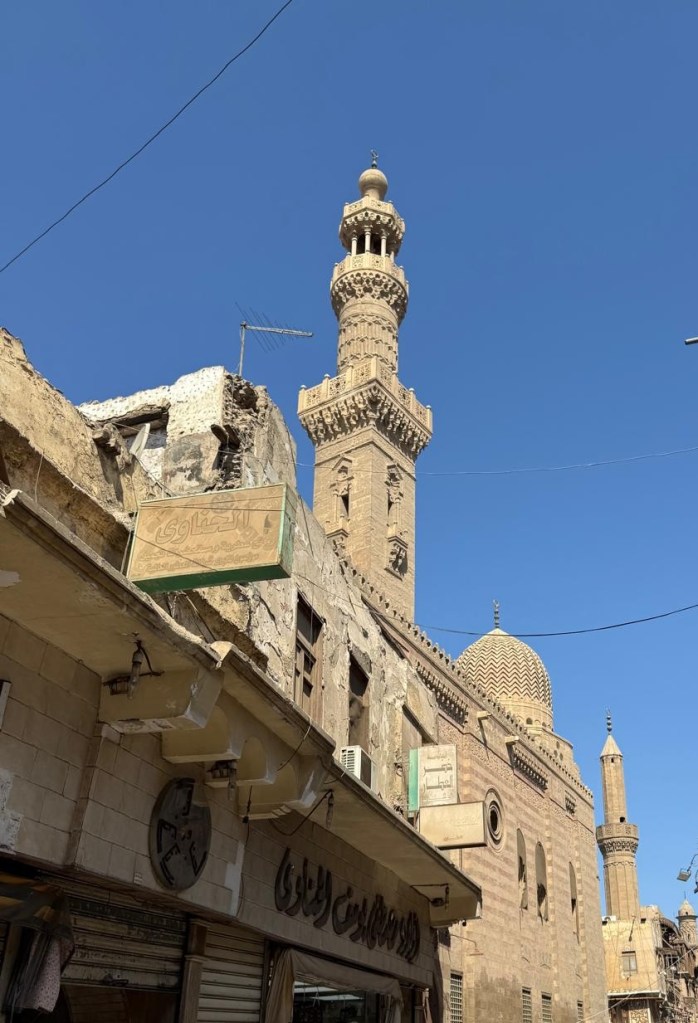
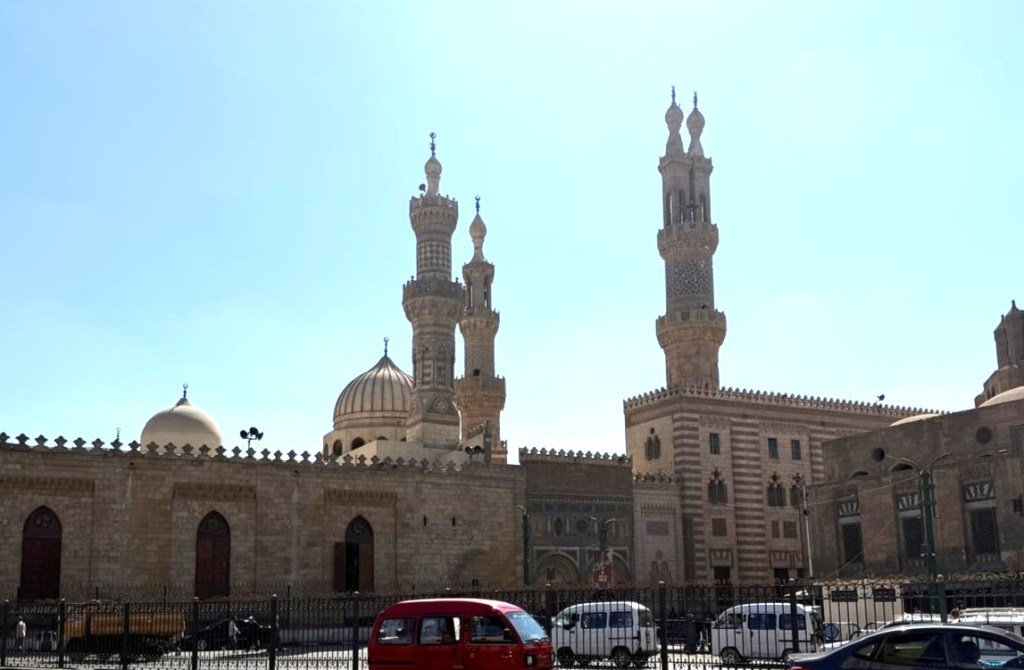
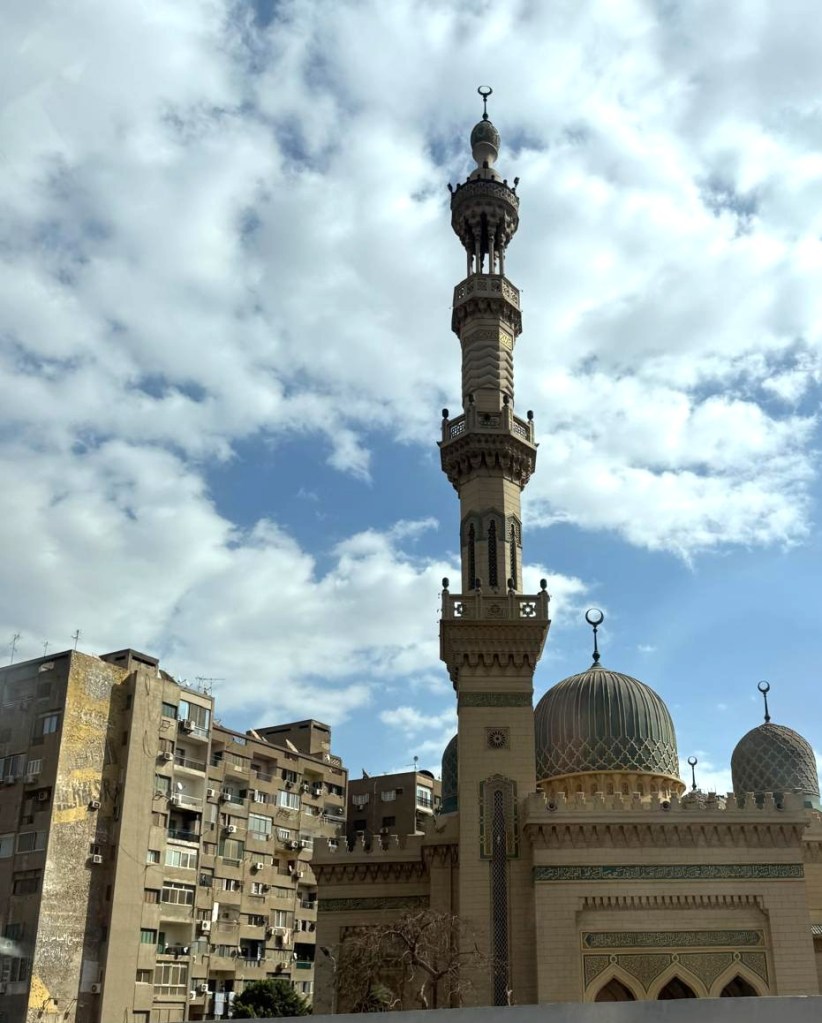
It struck me that the function is the same. A visible and audible reminder that daily life is structured around something larger than schedules and errands. The physical environment reinforces shared rhythm.
The difference is not presence, but rather familiarity. In Scranton, church bells blended into the background because they were normal to me. Here, the call to prayer stands out because it is new. But for many of my students, it is simply part of the day’s architecture, no more remarkable than a school bell.
Living here has made me realize how often we mistake familiar for neutral and, unfortunately, then forget about it or fail to appreciate it. (On a side note, I have not resolved the pizza place being on the blocks between churches here yet, and I miss my pizza.)
Questions I Cannot Stop Asking
I have also discovered I am developing a new hobby: asking questions that I cannot easily Google. For example:
- How do families coordinate schedules during Ramadan when the active day shifts to nighttime?
- How do students stay up late, get a few hours of sleep, and then rise before dawn for suhoor (their meal before fasting) and then function all day?
- How do universities adjust cognitive load when students are fasting beyond shortening the day and potentially adding a random online presentation at 9:00 p.m. at night?
- How do teachers manage energy levels in afternoon classes?
- Does learning feel different at 2 PM when you have not had water all day?
These are not abstract questions. They are instructional design questions. Education is not separate from physiology. Sleep cycles, nutrition, social expectations — these all shape cognition. In the U.S., we design courses around standardized assumptions about students’ daily routines. Here, those routines change seasonally.
And suddenly I am rethinking everything I thought I knew about “optimal learning conditions.”
So Back to the Time Shift: Evening Changes Everything
The most dramatic shift happens after sunset. Restaurants that were quiet all day filled instantly. Streets that were rather vacant and slow became energetic. Families appear. Children are awake at hours that would be bedtime in the U.S. Cafés are busy at midnight.
My sense of time is failing (and my sleep cycle will likely try this but not adapt fully). I attended conversations about education reform at 11 PM. I have seen grocery stores fully active at similar hours. I have realized that my idea of “late” is culturally specific (and perhaps age-related).
Ramadan does not just alter eating. It alters social, intellectual, and community time.
Lessons Learned from Watching Ramadan Preparations
I thought preparation for Ramadan meant buying groceries. It does not. Preparation is social.
People check on each other. Invitations appear. Conversations slow down. Meetings begin with longer greetings. The day’s priorities subtly shift from tasks to relationships.
I am realizing that in the U.S., efficiency often defines productivity. Here, connection defines productivity. And in education, that matters. Because learning does not happen in isolation from the community. It happens within it.
Continued Reflections on What I Am Actually Learning
- I came here expecting to teach and collaborate about STEM education, teacher preparation, and instructional design. I am doing those things.
- But I am also learning something I did not anticipate: educational systems are inseparable from daily life systems. Yes, I know I teach about how the summer vacation was structured around the need for children to help in the fields, but we have moved so far beyond that; it is a concept and not life.
- Transportation influences punctuality expectations.
- Religious rhythms influence cognitive scheduling.
- Family structures influence study habits.
- Communication norms influence participation styles.
- The National Authority for Tunnels focuses more on moving people from one location to another rather than through a geologic formation, and I have still not resolved the issue in my mind with the type of geological materials and tunnels here.
- And the ringing doorbell from a delivery driver during a meeting is not an interruption; it is a reminder that teaching, learning, and living are never separate activities, and an opportunity to try and practice my Arabic.
- I am beginning to understand that Ramadan is not just a month on a calendar. It is a recalibration of pace. It is a recalibration of finding what is important in people’s daily lives.
- And I suspect that by the end of it, my sense of time in classrooms and outside of them will not be quite the same.
 Learning, Lessons, and Living