Accreditation Celebrations, Root Canals, and Iftars
“Sometimes it’s time to get away from it all and experience things in a completely different way.” — Kim Mance
I am going to start with something that is super surprising to me; something that I often avoid at my home institution because of the structure; something that I readily contribute to at a different school because of the people -accreditation visits. About ten days ago, somewhere in between blogs, the university I am at was going through its quality assurance visit from the ministry, which basically equates to our Middle States or CAEP accreditation visit.
Similar structure: paperwork and reports submitted in advance to address standards, a 3-day team visit, lots of meetings with various groups, and then a report-out.
I was asked to attend a meeting with my faculty liaison and was introduced to the team. There was another foreign professor there as well, who was also introduced. Then the questions started – for both of us. What do we teach? Who supports us being here? How do we find the students? etc., Nothing too major but questions that asked us to reflect on our experiences and the interactions with students thus far.
In the United States, accreditation often feels procedural — documents, standards alignment, evidence tables, assessment matrices.
Here, yes, there were reports and documentation.
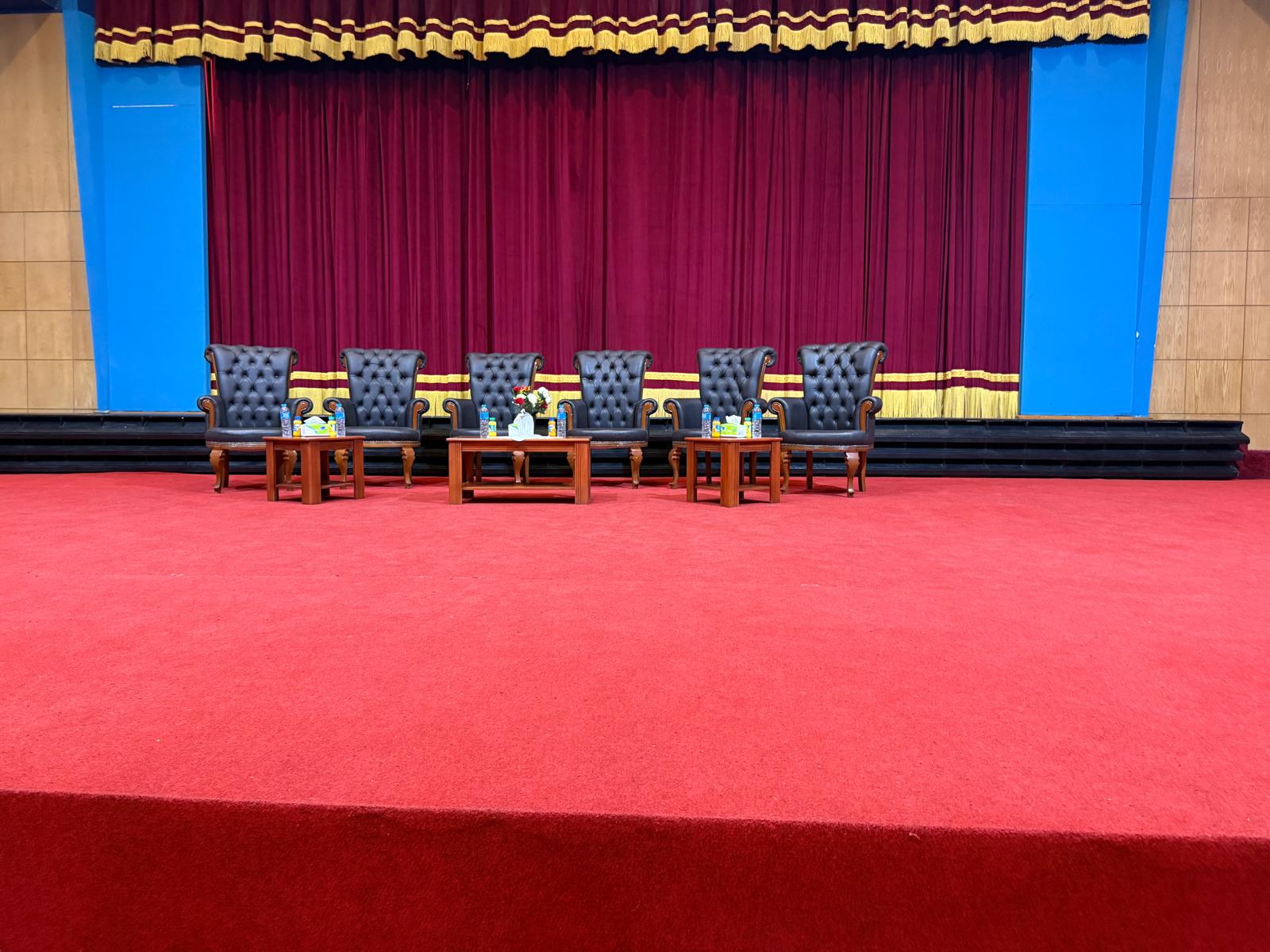
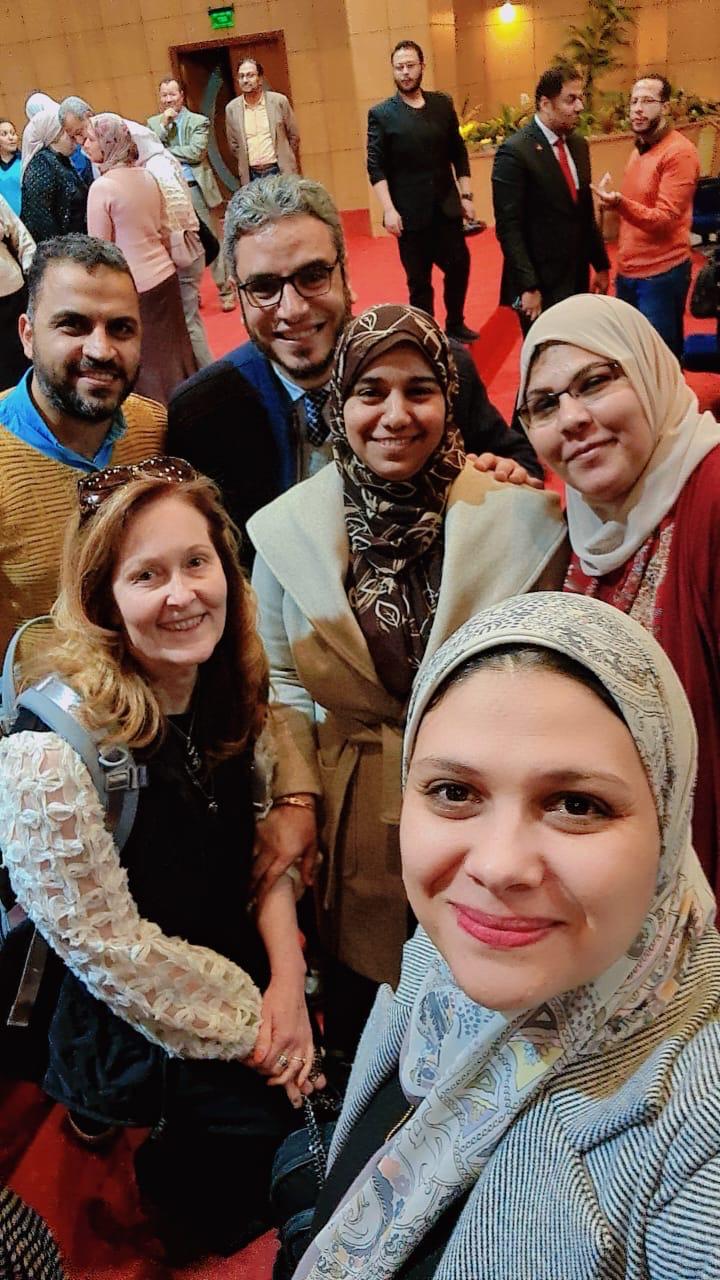
But there was also absolute pride. For the reporting out, the entire auditorium was filled – faculty, staff, students, cleaning staff, you name it. Once the report was given, the Dean spoke for some time and while I am not sure – I believed she thanked each and every person by name or contribution. She had them come up to be recognized by others and while I didn’t fully understand all of what she said, it was very evident from her tone and people’s responses that it was motivational. It was clear that she was respected as a leader and is a good leader! She even mentioned my name for contributing at which point my liaison grabbed my hand and brought me up with the rest of their team. I tried to hide behind them. I simply answered some questions honestly – but she would not allow it – my contribution, no matter how small, was appreciated.
What happened next was, well… a real celebration. The students started the music, and people celebrated — dancing, tossing someone in the air (yes, you read that right), and many hugs and pats on the back.
The conversations were energetic. People congratulated each other. There was visible excitement.
I realized something: accreditation here was understood as achievement, perhaps an obligation and requirement, but, at least to an outsider who has only experienced accreditation in the US, it was different.
And that perspective changes how people approach improvement. When evaluation is viewed as recognition rather than inspection, participation increases.
I never thought I would say the process of hearing an accreditation report was a moving experience – but it was.
Education again reflected culture.
Life Happens – Even When in Another Country
By this point, I needed multiple things for life. For example, somewhere to get my hair done, which is a stressful aspect. Google worked with many, many reviews read and a location selected, but that in itself didn’t lessen the angst as I sat there thinking – that color is much more liquid than the one Erin uses…. Will it run? Why didn’t they even color-match with a sheet? All in all, it turned out fine.
The next “life moment” was an infected tooth. I ignored it, I took the antibiotic I had, but no it did not improve. It was time to “bite the bullet” with no pun intended.
In the United States, if you need a dentist and are traveling, you open a browser, read twenty-seven conflicting reviews written by people who are either furious or ecstatic, filter by insurance, distance, and star rating, and make an appointment online at 2:00 a.m. without speaking to a single human being.
Now let me say this. I had a tooth that needed a root canal before I left, I ensured it was done, the crown was done and I was good to go.
I said to my dentist Cory – I don’t want to have to find a dentist in Egypt. He, however, said “don’t worry, I got you – I know a guy,” which, if you are from Northeast PA, specifically Scranton, you know that means a lot. He actually called his colleague “Abs” while I was there and introduced me. I got Abs’ (who is an Egyptian dentist now practicing in the US) cell number “just in case.”
So, my pursuit of a dentist began with a text to Abs (actual Dr. Abdul) on a Friday. He responded quickly and said he would get back to me.
Within about four hours, I had:
• a name
• a WhatsApp number
• and a message to say that the dentist could see me tomorrow (Saturday) night at 7:00 p.m.
All I needed to do was message him.
So, a dentist appointment at a mall office at 7:00 p.m. on a Saturday night. The night thing didn’t phase me, given that I knew about appointment times in Qatar. (Thank goodness for that prior experience). I get an Uber and head to the dentist with more angst about what the outcome would be than the hair salon.
The dental office was very modern, white walls, bright lighting, sleek equipment but the process felt entirely social.
I was greeted not with “Please fill out these forms,” but questions to help me fill out the forms. They took X-rays, and the X-ray machine gave directions in English, which created one of those moments where it was like – hmmm, that is odd.
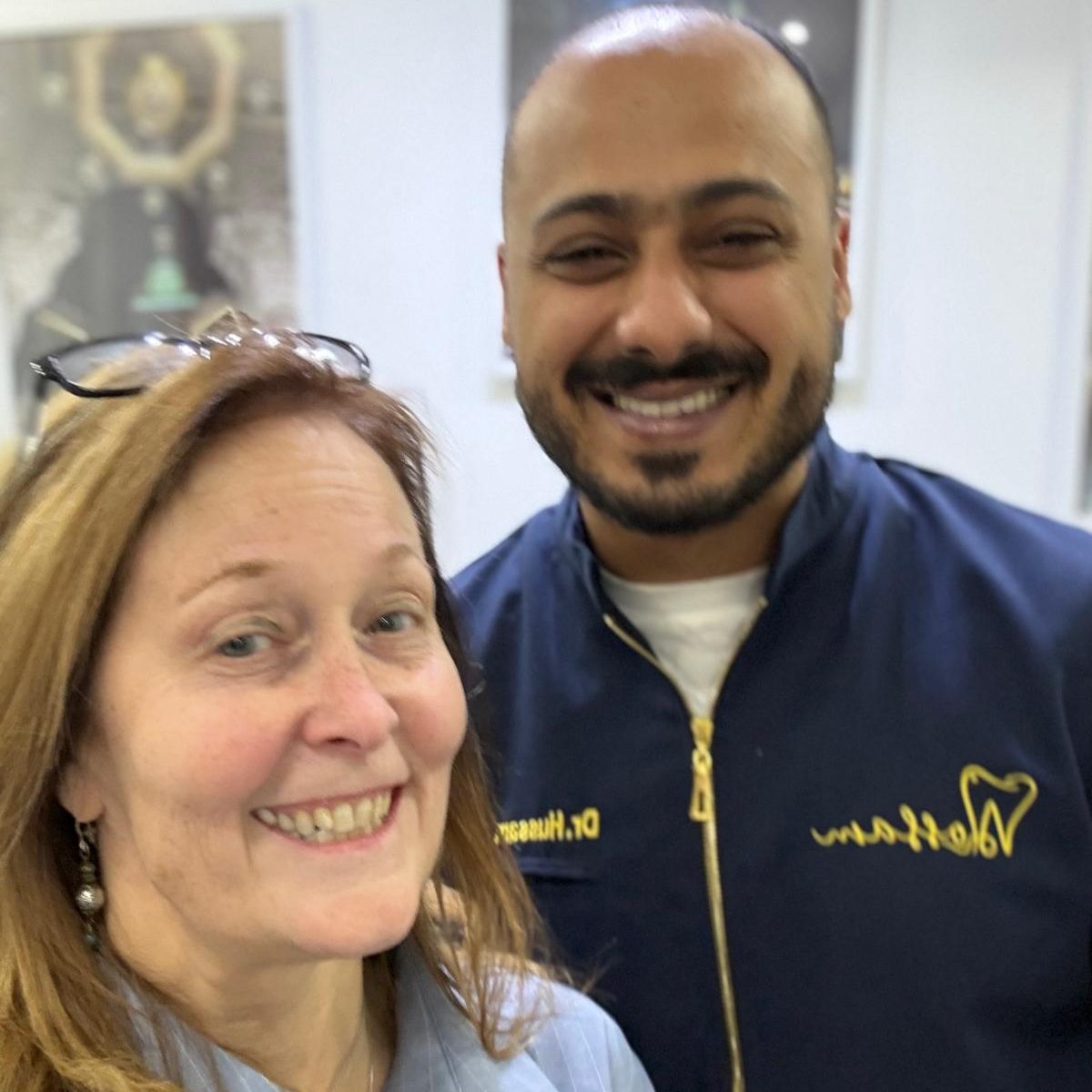
Dr. H arrived and talked to me for a few minutes about what was going on and how long I would be in Egypt, and whether I liked Cairo. I know how he and Dr. Abs know each other – they were childhood friends. The conversation lasted longer than most American dental check-ins. By the time I got situated in the chair, it was like we knew each other forever.
He confirmed what I already knew. An abscessed tooth – it needed a root canal. Not the one I had fixed before leaving – other side of the mouth, lower jaw instead of upper jaw, yep – here we go. He told me that he specialized in endodontics. I asked why, and my skeptical nature confirmed that later with a search. As he started to perform the root canal, my mind compared everything he was doing to everything MY endodontist does – step by step (I’ve had multiple root canals, so yes, I know the steps) – it was the same. He had the same experience of how much novocaine it takes to numb me; I had similar levels of discomfort the next day.
Can I now say that I have bi-nationally located endodontists?
The Pharmacy
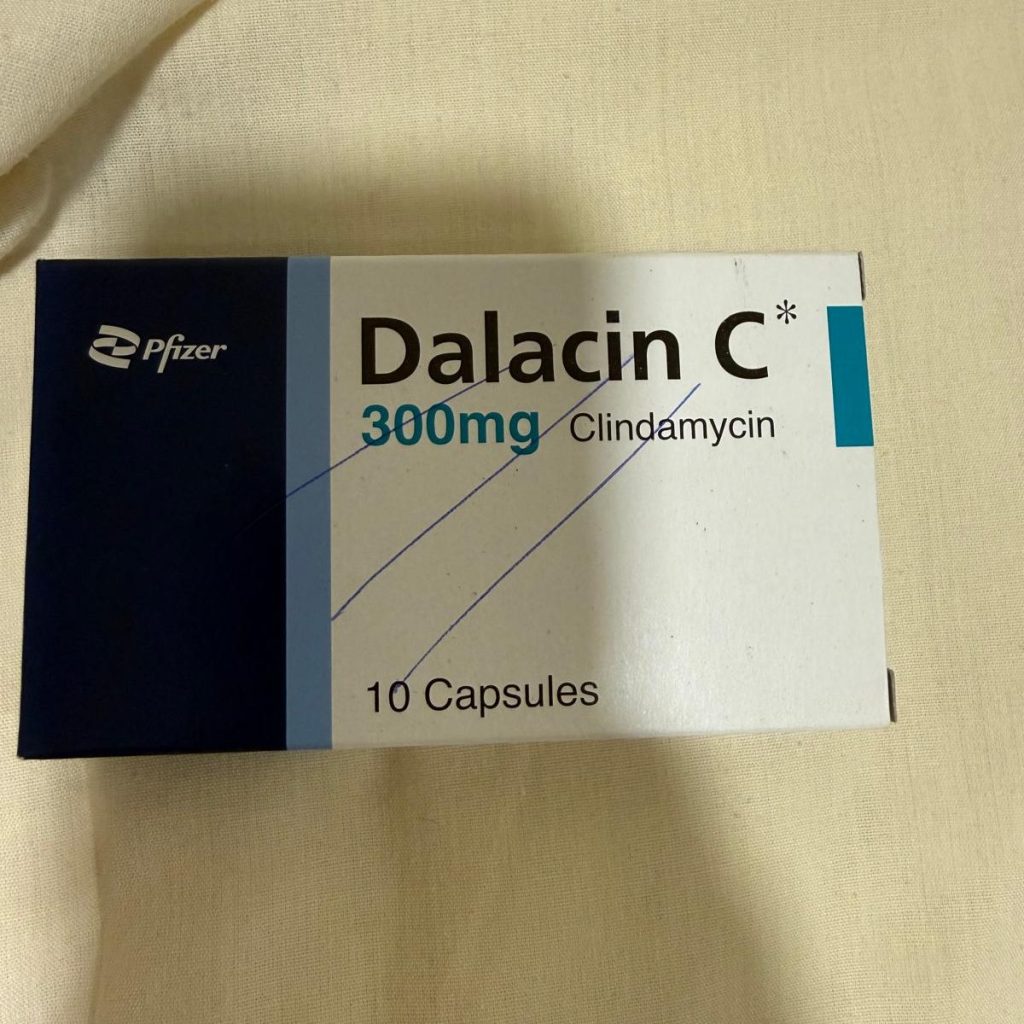
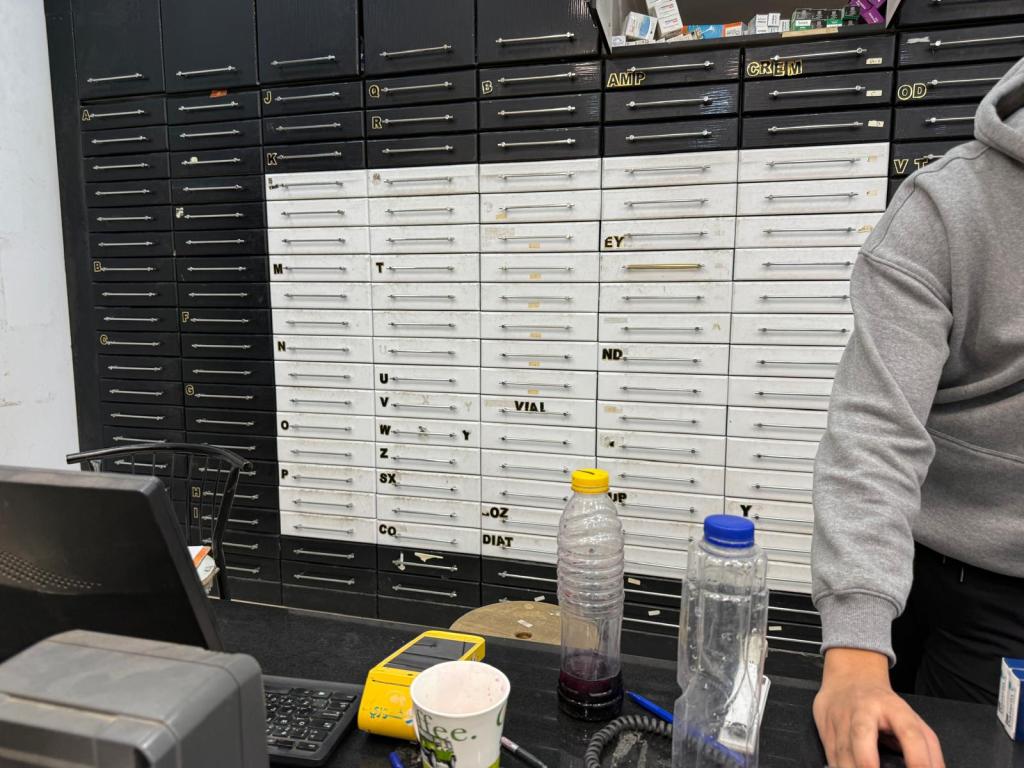
He gave me what looked like a sheet of note pad paper with three prescriptions on it and said I could get them downstairs at the pharmacy (at now 9:30 p.m.) I walked into the pharmacy, handed him the note and he reached into three different drawers and pulled out the equivalent of ambesol, a mouth rinse, and three boxes of an antibiotic. He handed me the sheet back to which I looked at him in confusion.
Me: Don’t you keep this? — Pharmacist: No, why would I?
Me: Ah, in the US, we aren’t even given the prescription sheet – they digitally send it. Pharmacist: Why?
Me: Ah, potential abuse of drugs, they don’t trust us? That’s a really good question now that I think about it. Pharmacist: blank stare.
He then takes the one box of antibiotics and draws three lines across it. I again look confused.
Me: What does that mean? Pharmacist: (Looking at me like I’m clueless) -three lines – take three times a day.
Me: Ah, okay, thank you.
I paid for the prescriptions and left. Total cost thus far this evening — Root canal and filling at an emergency visit – About $63US, Prescriptions – no insurance: About $12US. Having a trusted recommendation: Priceless.
My mother later asked if I could submit that to my insurance. My response – I am not sure the time to complete paperwork to explain the need for a dentist in Egypt for major dental work is worth it. That says a great deal.
Dual Languages –
Back to the dentist for a moment. What I greatly appreciated was that he explained everything about the procedure entirely in English.
Perfect English.
Medical terminology. Technical vocabulary. Precise explanation.
I understood everything.
I realized this was not accidental. English here functions as a shared professional language, not cultural or social, but technical. It is the language of machines. It is why my STEM students are using English in their classes so that they can prepare to teach secondary students who will learn STEM subjects in English.
I had just experienced something fascinating:
- I could not always navigate a pharmacy independently, but I could understand a dental radiography system.
- The language barrier is not a straight line. It is domain specific.
- Daily life may operate in Arabic but much of what is my background also operates in English.
And, naturally, this became an education question in my mind.
If students are learning science or engineering partly through a second language, then cognitive load is not just about content difficulty — it’s also about linguistic context.
My First Iftar
The next “life moment” was my first Iftar.
I had been told what Ramadan would be like. I had read about fasting from sunrise to sunset. I understood the concept. I still do not fully understand the experience but I did engage in one small part of it.
In the United States, meals happen whenever they fit into your day. People eat between meetings. I grab something while driving. Families schedule dinner around activities, practices, appointments, and work obligations. Even holidays rarely produce a citywide pause. Some people celebrate; others continue normally. Time stays individual.
Ramadan does not work that way.
Late afternoon, the city still moved, cars, horns, shops open. People were not just going about their business. They were waiting. The streets did not suddenly stop; they gradually softened. Conversations shortened. Families moved with purpose rather than hurry.
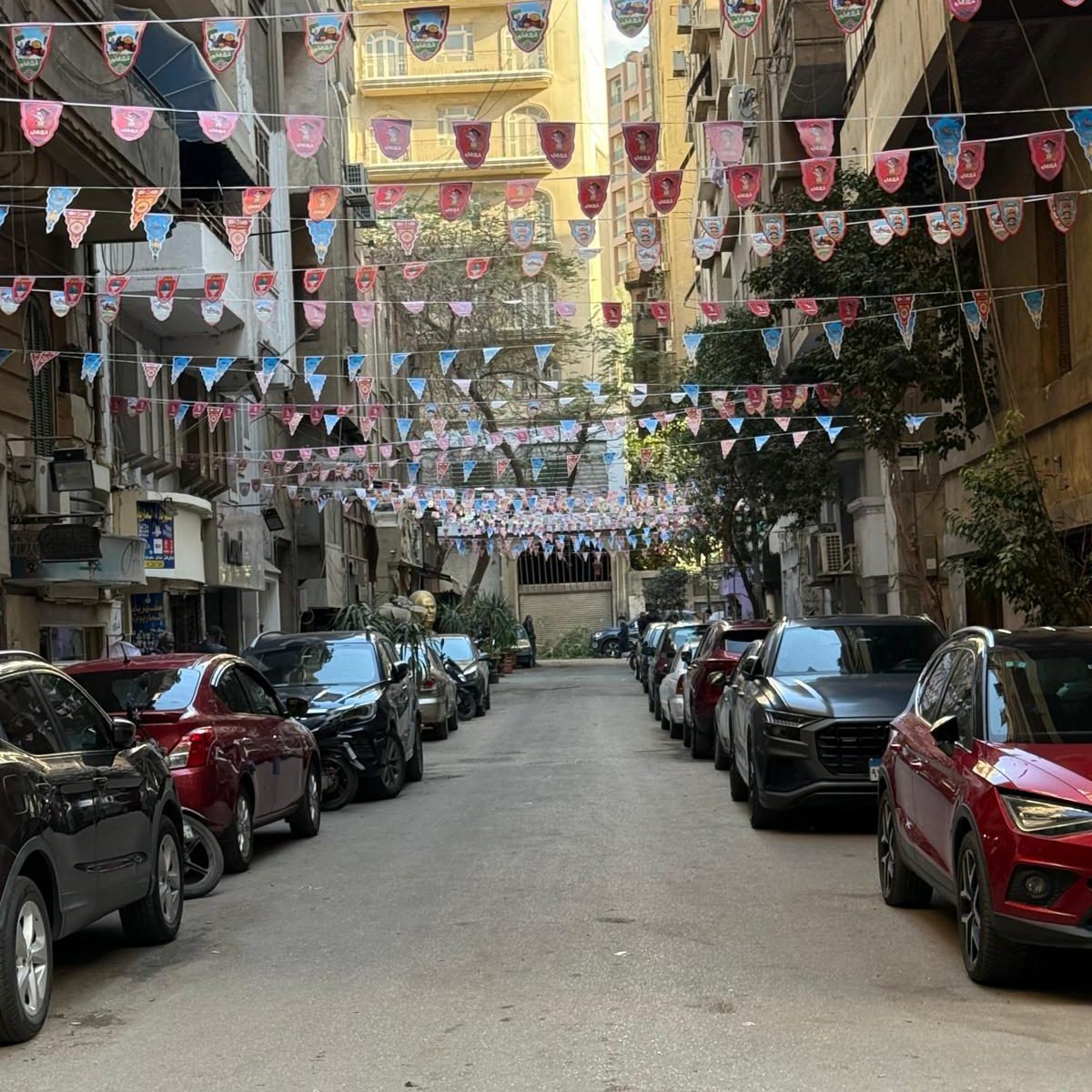
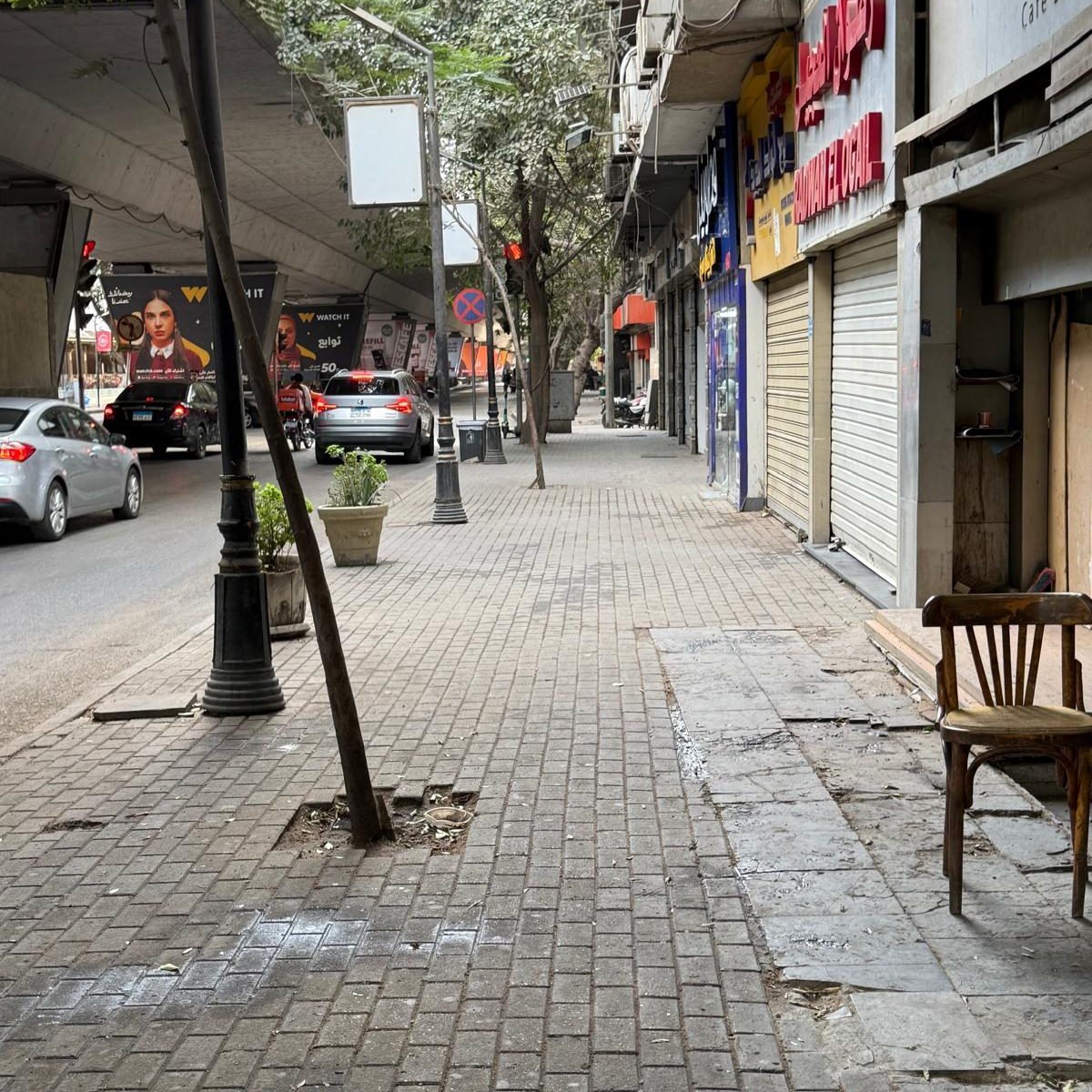
People were watching the same moment.
I reached the restaurant for the Iftar early and wandered about outside for a while before going in. Right before sunset, something I can only describe as collective anticipation appeared. Not loud. Not chaotic. Coordinated. As we all had arrived for this event and were greeting each other and taking our seats, you could hear the call to prayer begin.
And at that exact moment, the food was ready, and everyone began to eat.
Not approximately. Not casually. Simultaneously.
It was not simply the start of dinner. It was synchronization.
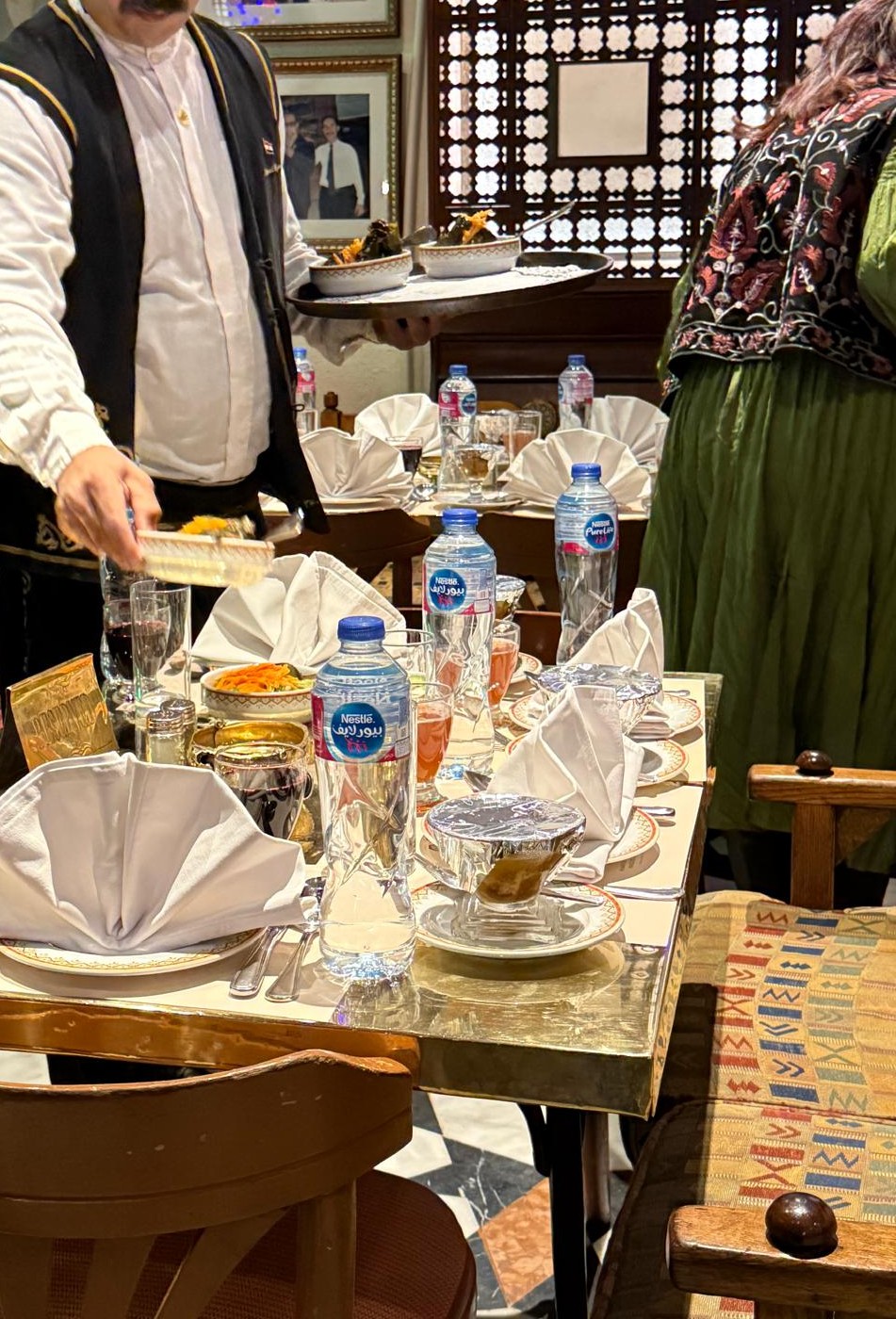
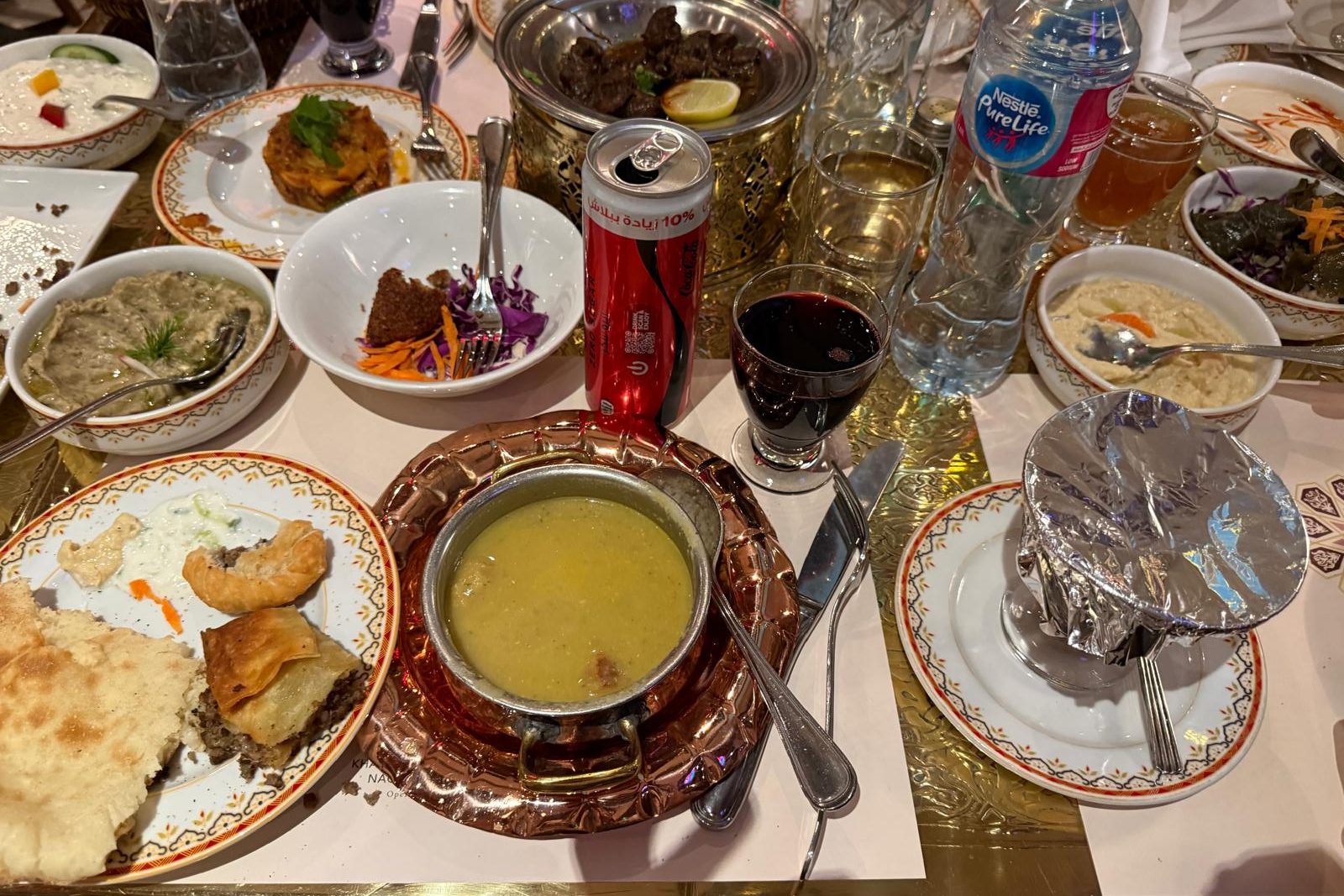
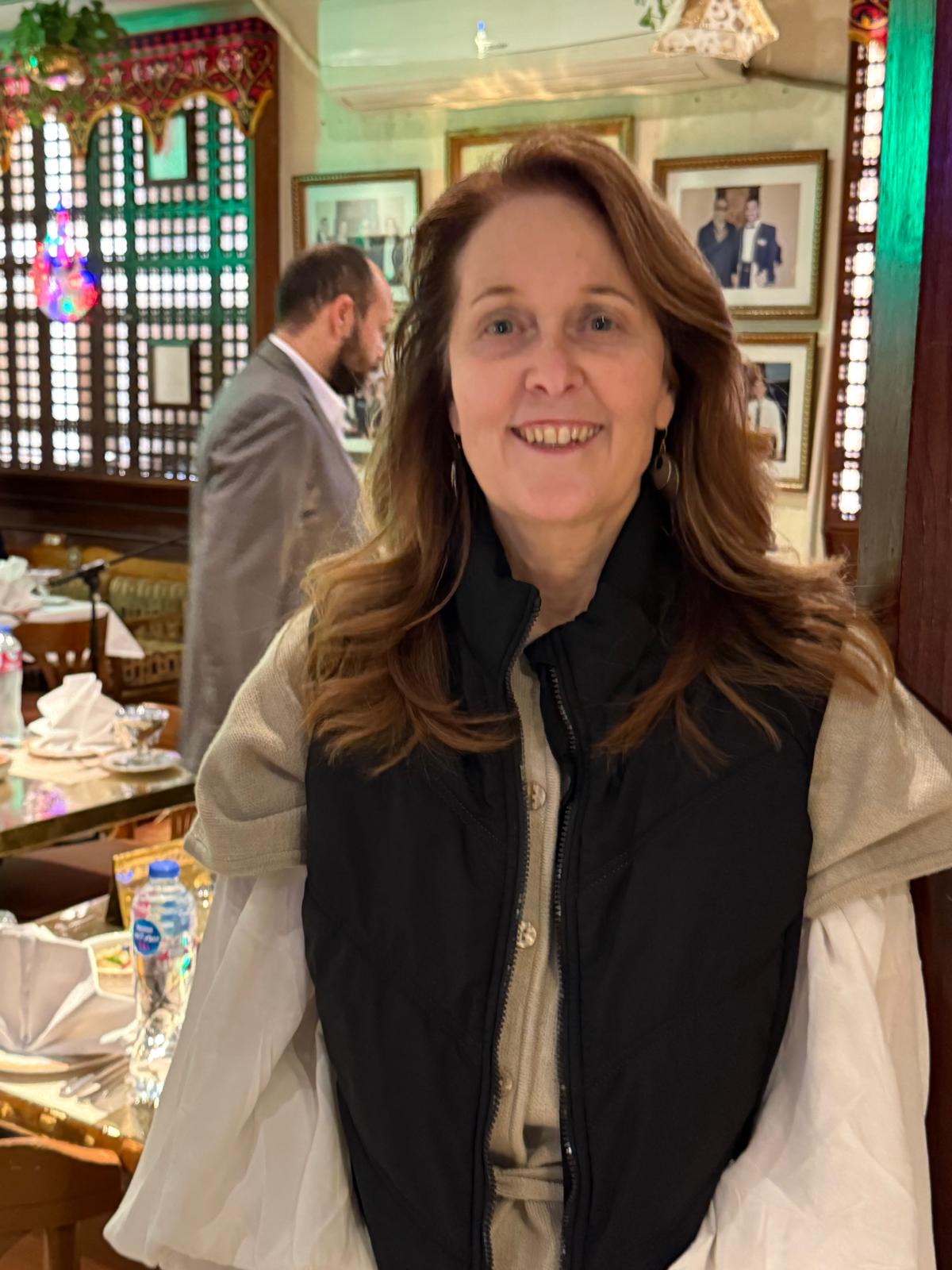
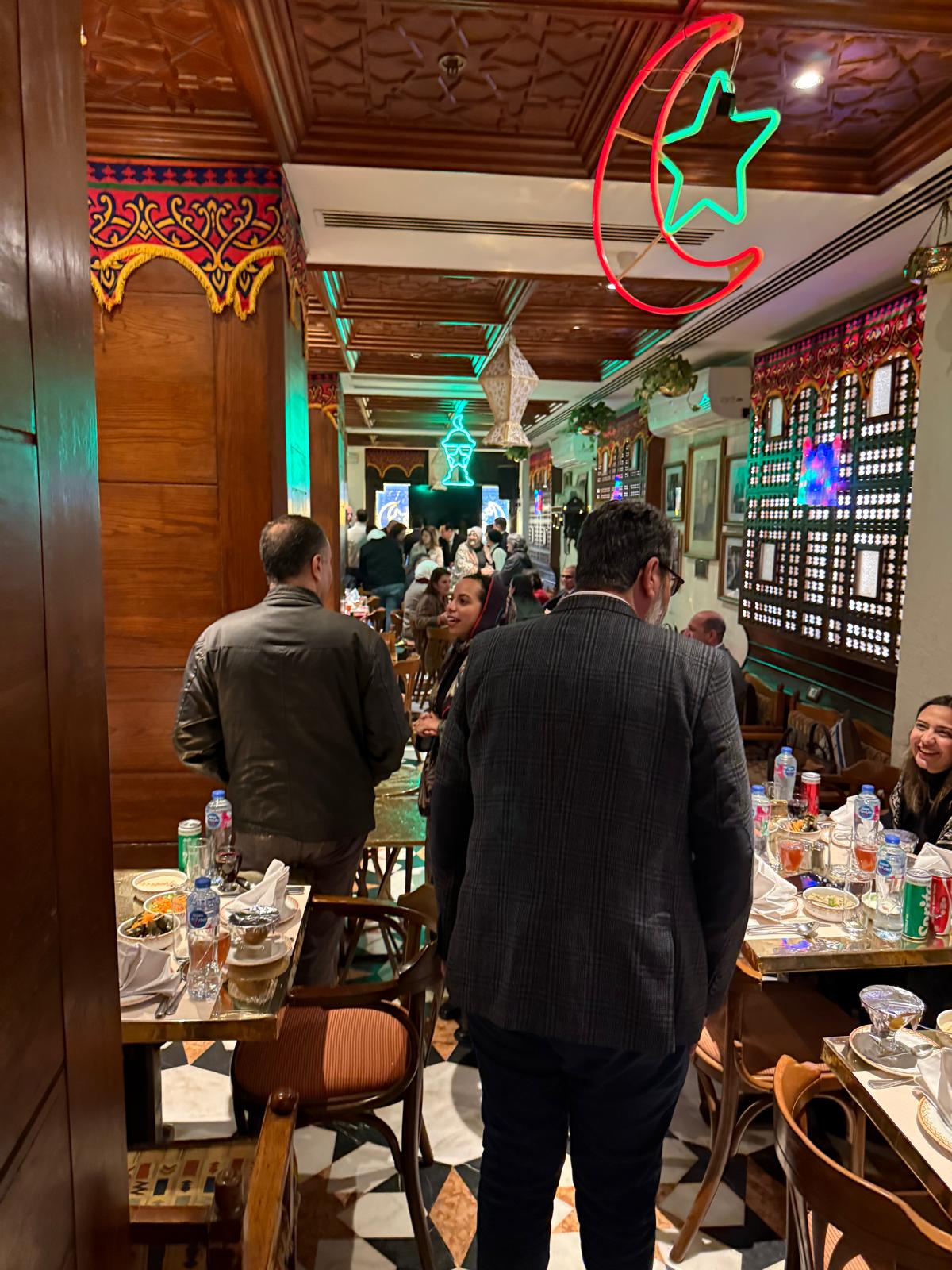
At the restaurant, no one started early. Plates sat untouched in front of people. The waiters were ready but still. Entire tables paused. When the call finished, the first few bites were taken together.
Dates first.
Then juice.
Then soup.
Then bread. (Beladi bread which is my absolute favorite).
Then dishes I could not identify but absolutely enjoyed.
No one rushed. No one ate alone. Conversations lasted longer than the actual act of eating. People did not leave immediately after finishing. The meal was not the goal. The shared moment was.
I realized I had misunderstood something important.
In the United States, a meal is an activity. Here, a meal is a time structure.
Ramadan does not just change eating. It reorganizes social time. Workdays shift. Sleep shifts. Traffic patterns shift. Stores adjust hours. Even the pace of conversation changes. The day becomes organized around a shared temporal anchor rather than individual schedules.
The system did not depend on reminders, notifications, or calendars. It depended on shared understanding even from those of different religious backgrounds.
And that realization moved the experience from cultural observation into an educational observation.
Students do not just learn content inside classrooms. They learn within a cultural structure of time. In the U.S., schooling teaches students to manage multiple overlapping schedules — assignments, sports, part-time jobs, activities — and to work independently within flexible deadlines. Here, daily life reinforces collective timing and shared pacing.
The difference matters.
Because learning behaviors — participation, preparation, even when students speak — are shaped by how a society organizes time itself.
I did not just attend a dinner. I watched an entire city keep the same clock.
What Three Disparate Events Actually Taught Me
The accreditation experience, the iftar, and my emergency need for a dentist did not just teach me about those scheduled events and those unscheduled events that occur when life happens when you least expect it. It also taught me about systems.
• Healthcare can operate through relationships (a human relationship)
• Professional language operates through English (linguistic relationships to fields of study)
• Social life operates through shared time (family and friend relationships)
• Universities operate through community validation (professional relationships)
In my first week, I wrote that living here requires actively negotiating daily life
I am realizing now that the negotiation is about understanding how different systems can be organized while still functioning effectively.
Efficiency is not universal. Structure is not universal.
Even something as ordinary (or stressful) as a dentist visit can reveal how a society organizes trust, expertise, and connection.
Final Reflection
I came here expecting to compare education systems.
Instead, I am learning to notice systems.
The dentist, Iftar, and accreditation meetings were not unrelated experiences.
They were all examples of the same idea: Learning is shaped less by curriculum than by context.
And sometimes, the most revealing lesson begins with someone saying, “I got a guy.”
 Learning, Lessons, and Living