Coffee Cherries, Canopy Birds, and the Shadow of Arenal
Dawn and wakeup time in Alajuela didn’t wait for an alarm clock. By 4:45 a.m., the urban canopy outside the Hotel Honey Bee was alive with the whistles of one bird I did not see and clay-colored thrushes (the national bird of Costa Rica). For our nine college students and four co-instructors, it was the perfect natural wake-up call. After an amazing breakfast, we packed our day bags, laced up our hiking boots, and loaded back into the field van. Our destination for the day was the northern lowlands of La Fortuna, home to the iconic Volcán Arenal. However, as any field biologist will tell you, the journey between ecosystems is where some of the best teaching moments happen.
Roadside Botany and Local Flavors
Our first technical stop of the morning was a local, rustic roadside market, a spectacular introduction to tropical botany, agriculture, and local commerce. Inside, the shop was packed to the rafters with unique local products. Long, clear plastic sleeves of fresh cashews hung directly from the corrugated-metal ceiling, alongside bundled packages of various treats. The market gave our students an up-close look at regional fruits and foods, with shelves stacked deep with local pastries and other treats.
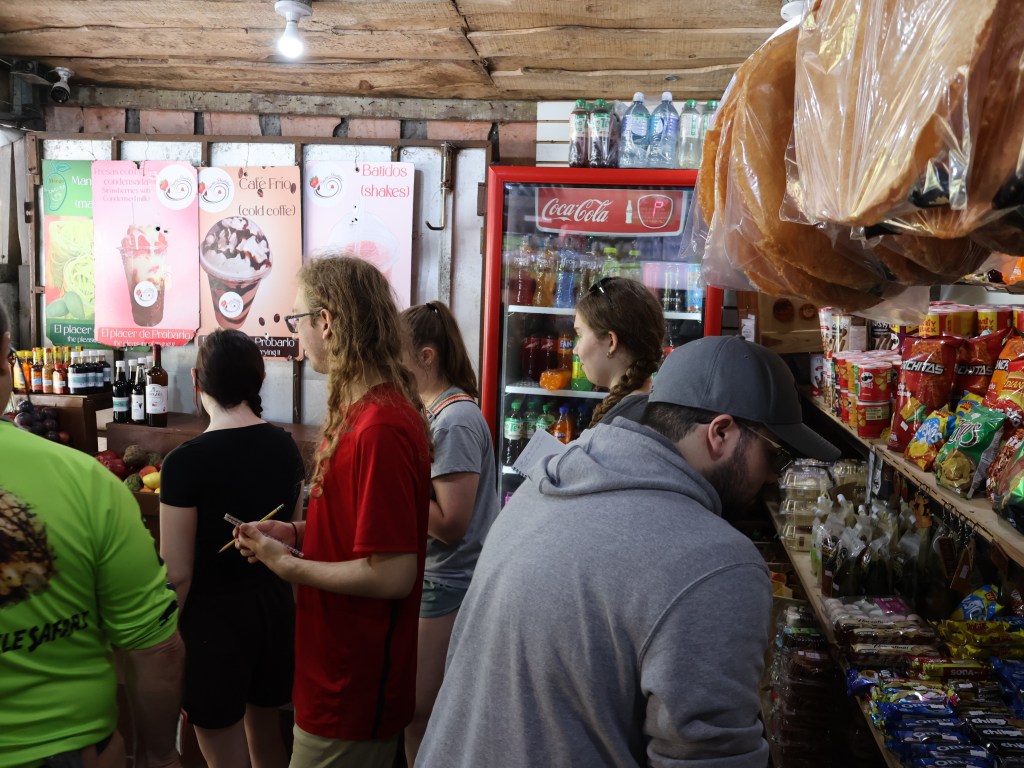
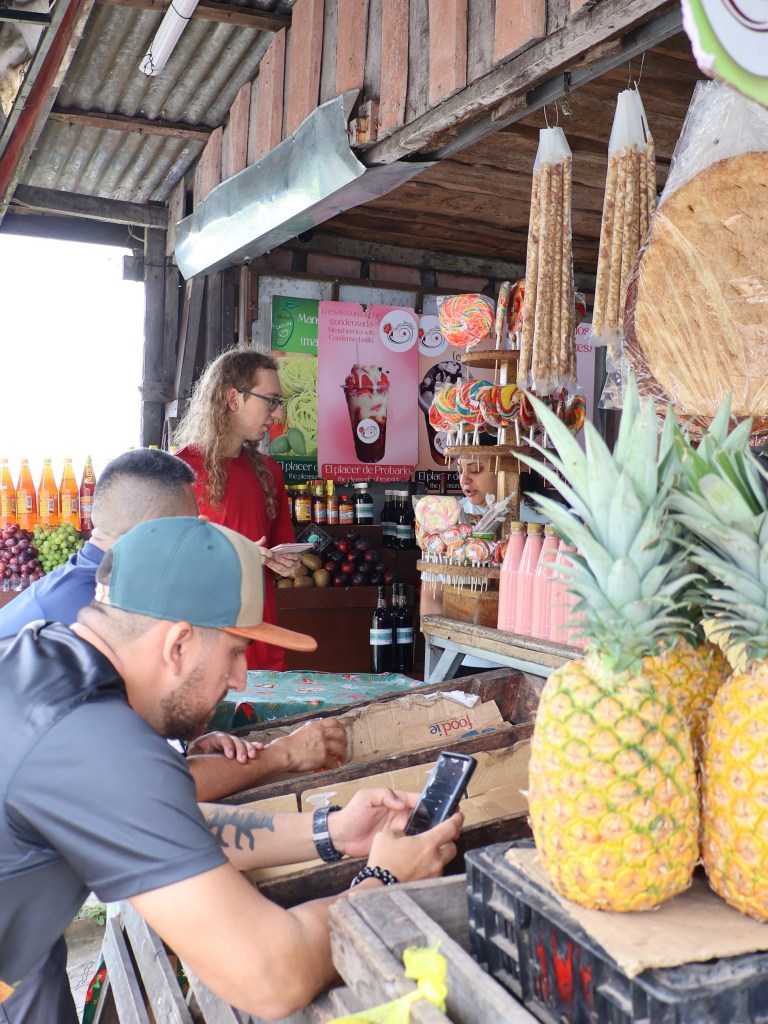
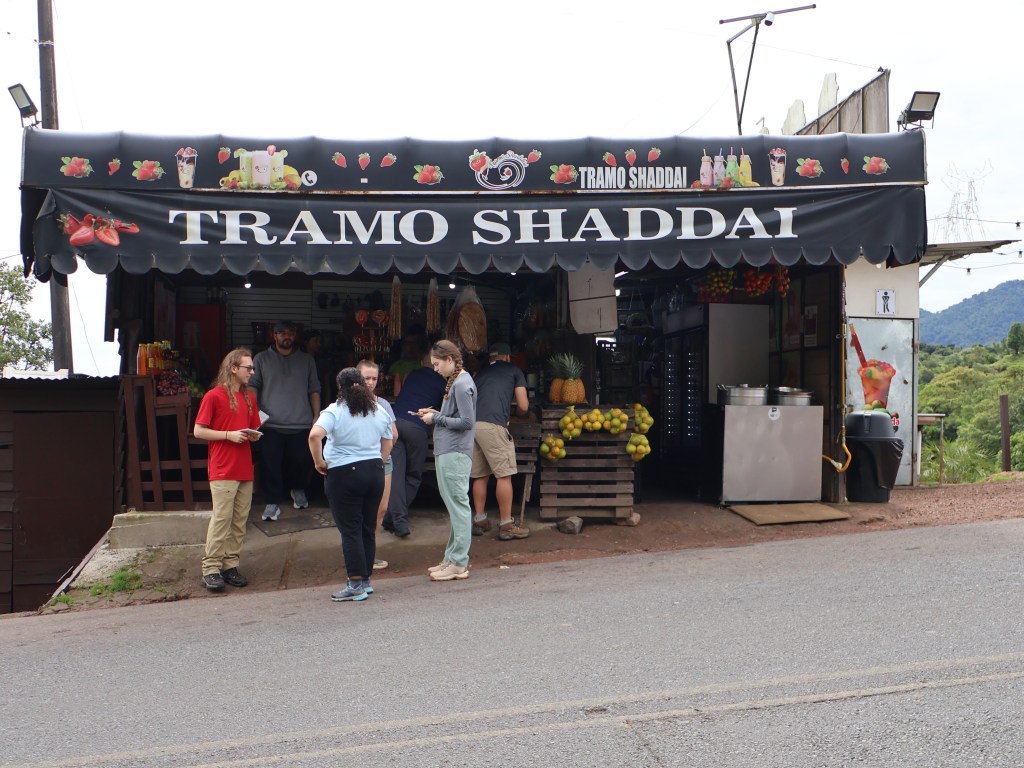
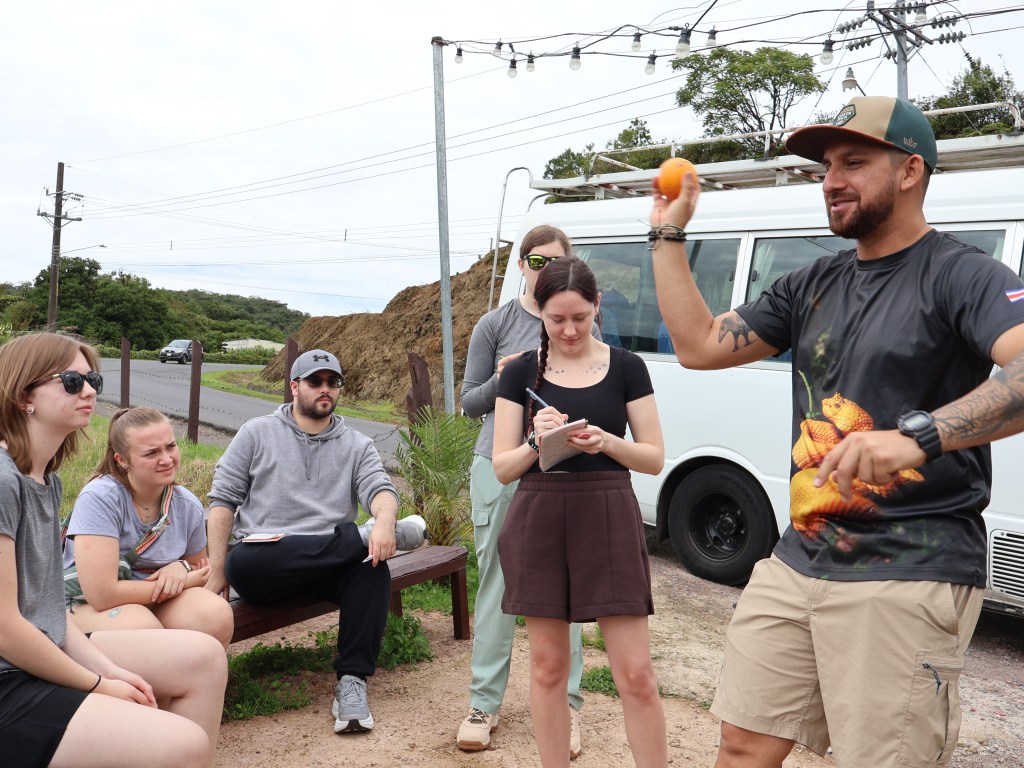
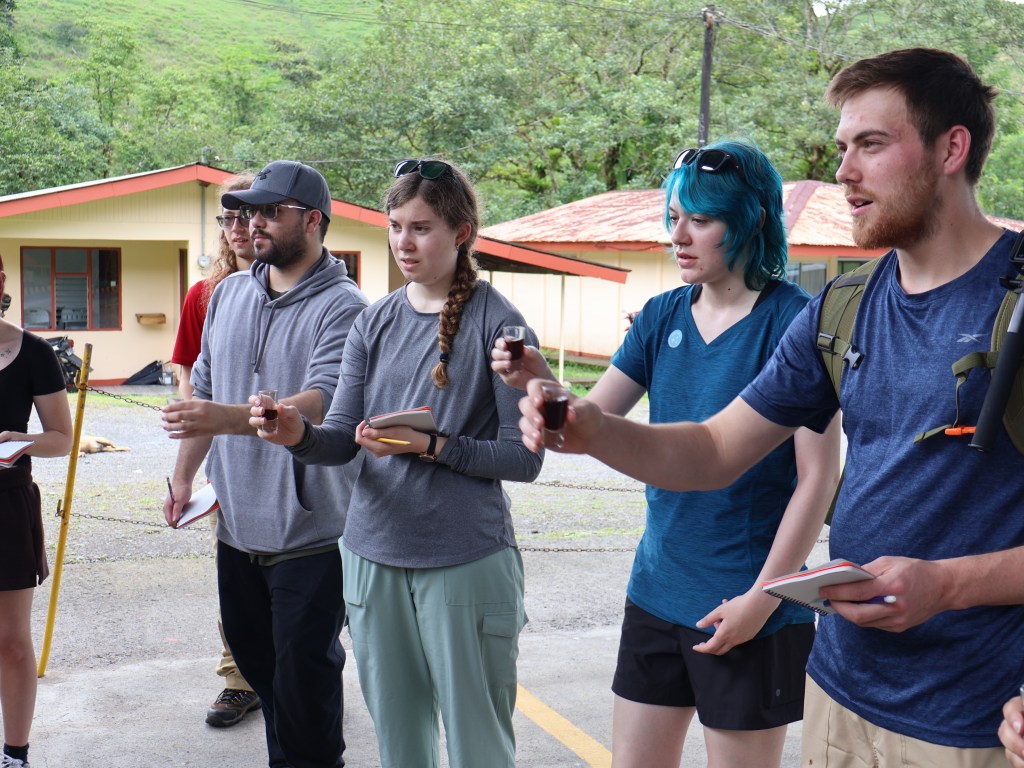
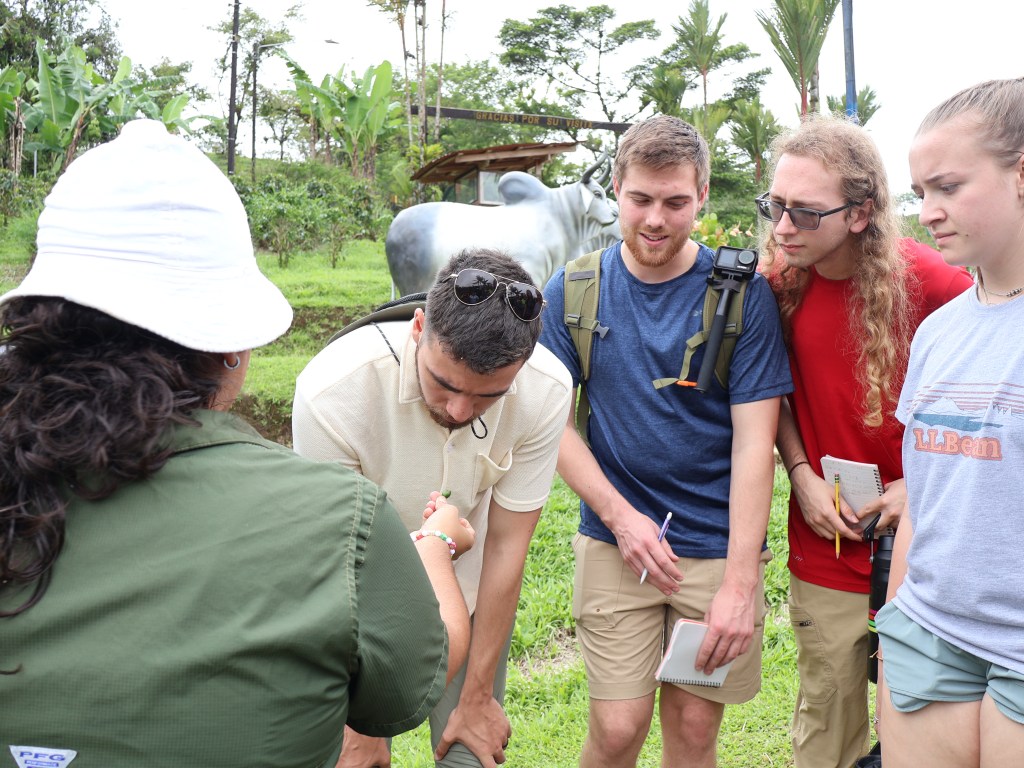
Our students took full advantage of the stop to sample the local items, examining traditional treats up close while chatting with the vendors and locals. Out by the van, we transitioned from sampling snacks to a hands-on taxonomy lab. One of our guides handed out a fresh fruit called a granadita, which is similar to a passion fruit, right in front of us, displaying its gelatinous, seed-heavy interior. Holding the halved, bright-yellow fruit rind in hand, we discussed the evolutionary trade-offs of its tough outer shell and the seed dispersal strategies of its sweet, pulp-covered seeds, and of course, tried the delicious fruit.
From Bean to Canopy: The Coffee Agroecosystem
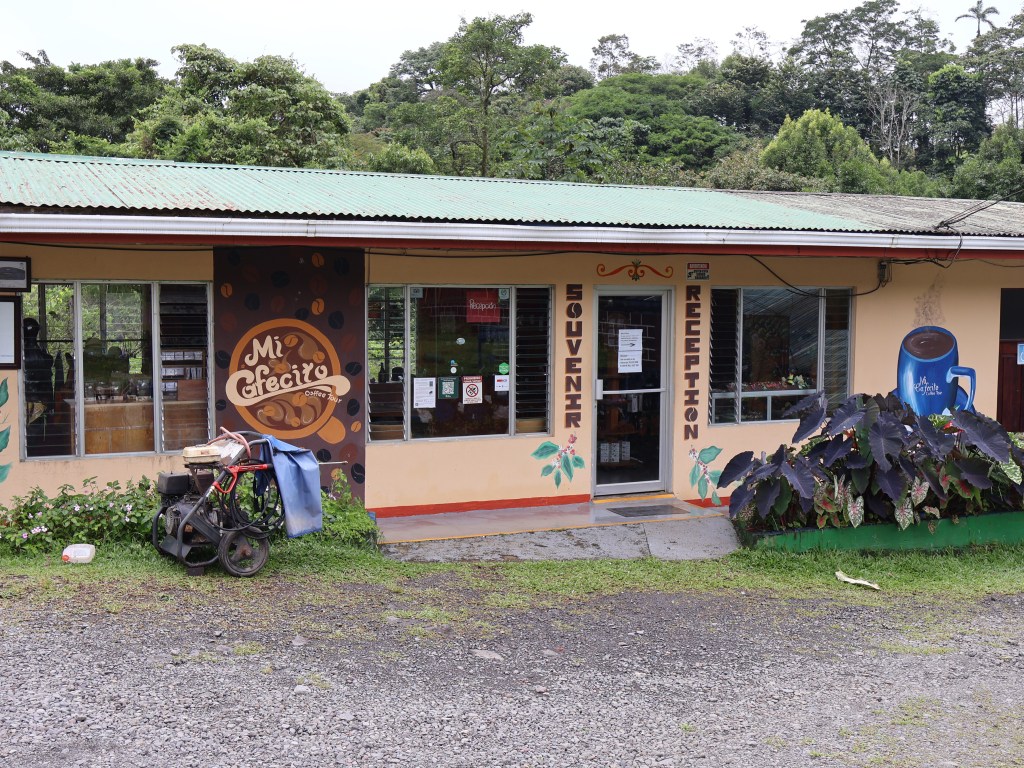
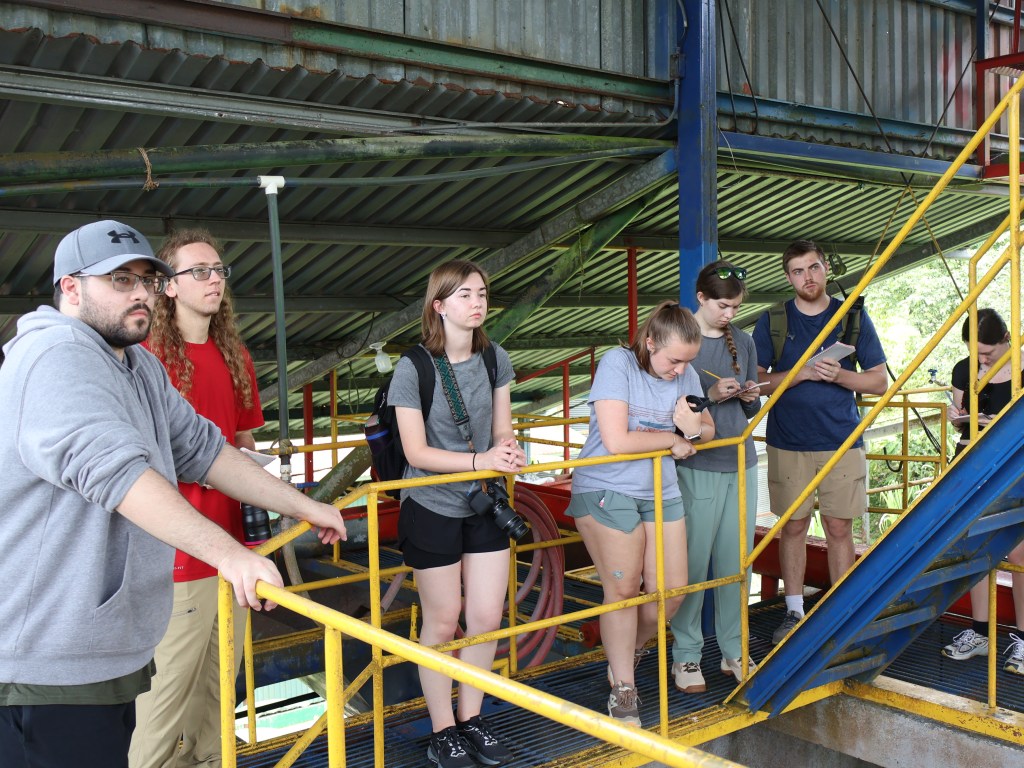
Leaving the valley floor, the field van began its winding ascent into the volcanic highlands. The air grew cooler, the humidity shifted, and the urban sprawl gave way to neatly terraced hillsides. This brought us to our primary morning study site: an active, traditional Costa Rican coffee plantation/coop.
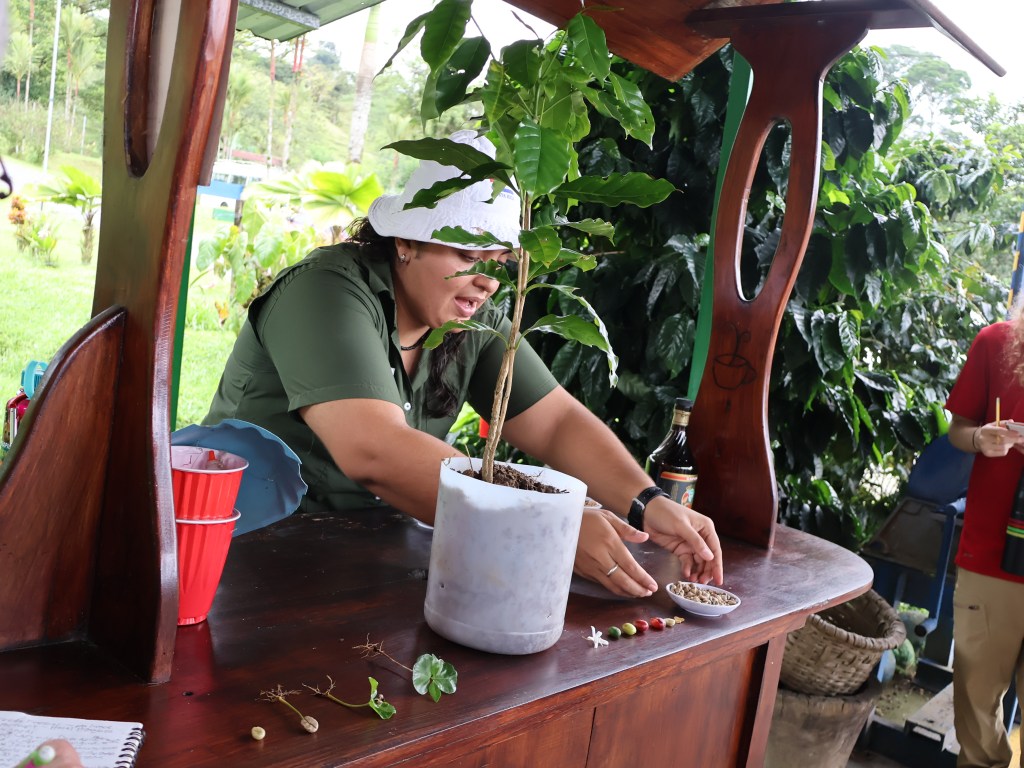
After hearing about the process of growing, picking, and separating coffee beans, we stepped out into the groves were treated to an incredible, immediate example of symbiotic micro-ecosystems. Right on the glossy green leaves of a coffee plant, we spotted leafcutter ants (Atta species) meticulously at work. It was a flawless, real-time lesson in herbivory and insect behavior happening right on our primary agricultural subject.
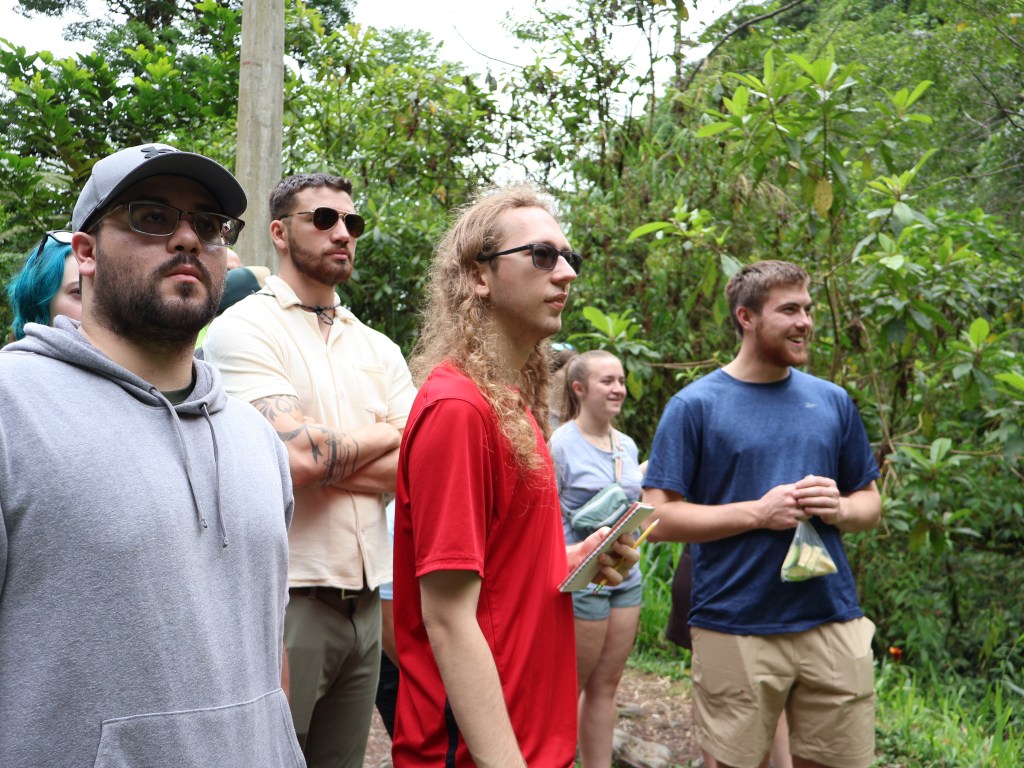
Standing near a large banana tree with broad, sprawling leaves, our instructors pointed out how shade-grown farming preservation provides vital biological corridors. Students kept their field notebooks in hand, writing down observations and tracking the diverse strata of the plantation, from the low ground cover up to the mid-story coffee plants and high canopy trees that shelter migratory birds.
Geothermal Mechanics and Nightfall Reflection
After a half day of learning about coffee, dissecting fruit, and intensive birding, we concluded our field itinerary at a local thermal hot springs resort. Surrounded by lush, tropical landscaping thick with brilliant red ginger blossoms, dark maroon foliage, and towering palm trees, the thermal pools offered the ultimate final geology lesson of the day.
And immediately the downpour happened. Before the storm intensified and the thunder and lightning started, several of us took a ride on superfast water slides, which we returned to after the storm passed.
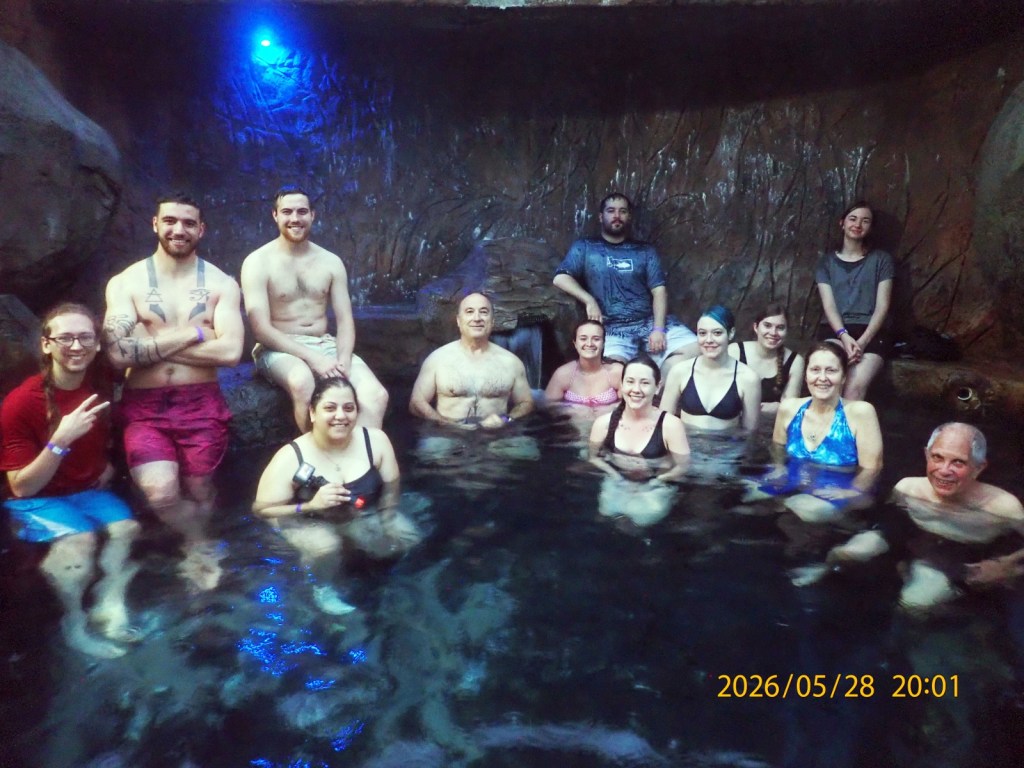
We gathered in the warm, mineral-rich waters under a sheltered pavilion to discuss the subterranean plumbing of La Fortuna. These pools can trace their heat to the direct connection between the magma chambers deep within the nearby volcano, the intense heating of local water tables, and the subsequent venting of the surface springs we were relaxing in.
As twilight set in over the gardens, we conducted our nightly debrief right from the edge of the pool and discussed many topics ranging from biology to politics to geography to geology.
Dinner and Dancing
To cap off an already unforgettable day, the entire cohort gathered at a lively local restaurant in La Fortuna to celebrate a monumental milestone: one of our nine students turning 21. Field courses have a unique way of turning a group of classmates into a tight-knit family overnight, and the energy at dinner was electric as we toasted the birthday student with fresh tropical fruit juices and traditional Costa Rican dishes. The real highlight of the evening began when the restaurant’s music kicked into high gear, transforming the space into a dance floor. Instructors, students, and locals alike threw academic formalities aside, stepping up to learn the rhythms and show off our moves. It was a beautiful, joyous celebration of community, culture, and connection and easily one of the most memorable nights of the entire trip.
Trip Checklist Status:
- Hotel Honey Bee Departure: Completed ✓
- Roadside Market & Fruit Taxonomy: Completed ✓
- Leafcutter Ant Micro-Study (Atta): Completed ✓
- Highland Coffee Agroecology Tour: Completed ✓
- Geothermal Hot Springs Study: Completed ✓
- Dinner and a Celebration: Completed ✓
 Learning, Lessons, and Living