“Every few hundred feet the world changes.” – Roberto Bolano
February 18, 2026: When I first began preparing for this Fulbright experience, I assumed most of my reflections would center on the university courses, teacher preparation, instructional practices, and how education systems differ across cultures. I am also sure that many more of those will occur as the spring semester continues.
But what I didn’t anticipate is how much understanding a university requires, understanding everything around it.
A campus is not just buildings and syllabi. It is transportation systems, daily routines, shared meals, street vendors, conversations, and the quiet expectations students and teachers carry with them before they ever enter a classroom.
Here (at least for me), learning begins long before class.
The University Is Familiar — And Completely Different
My first days at the University were somewhat disorienting in a strangely comforting way.
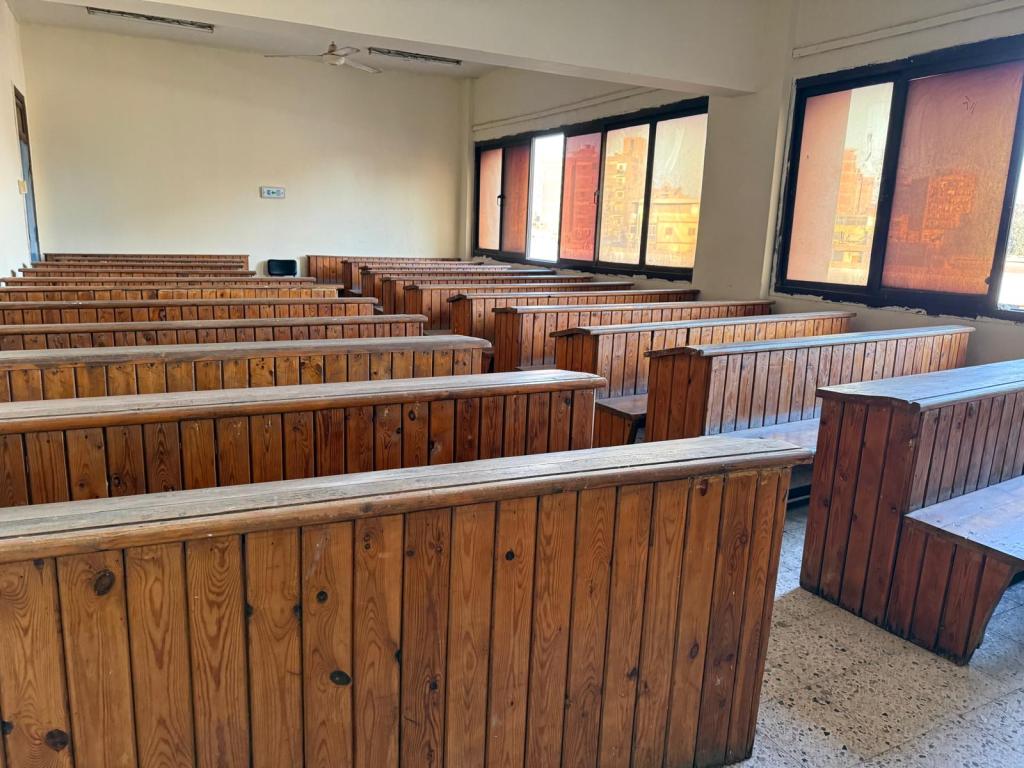
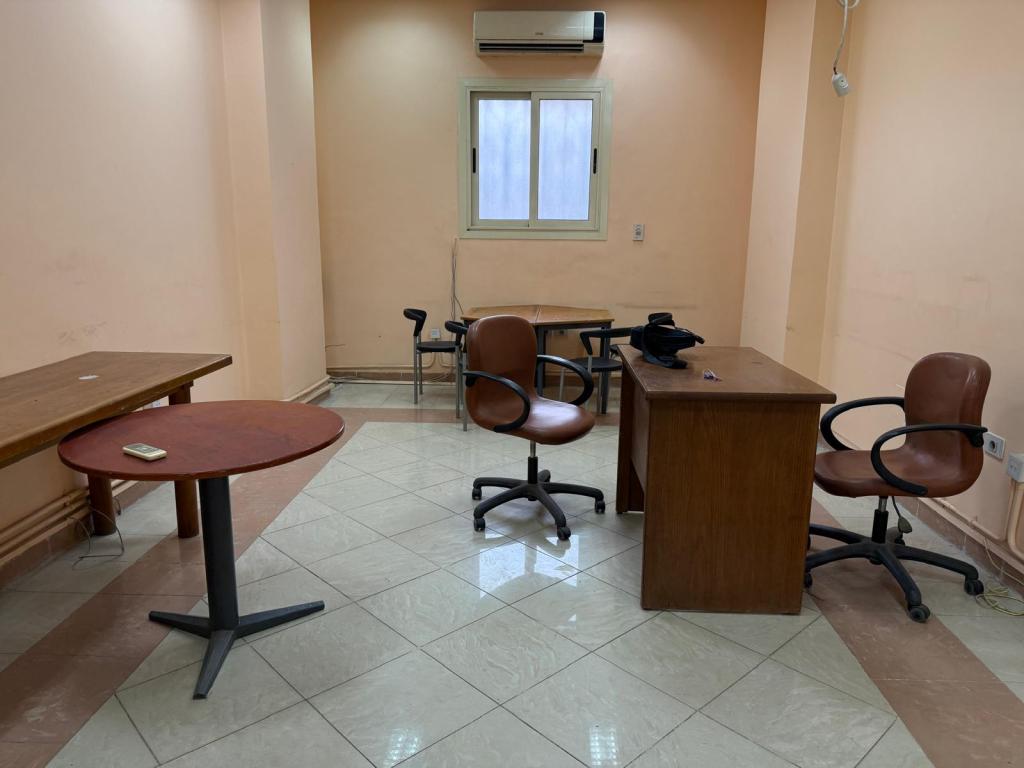
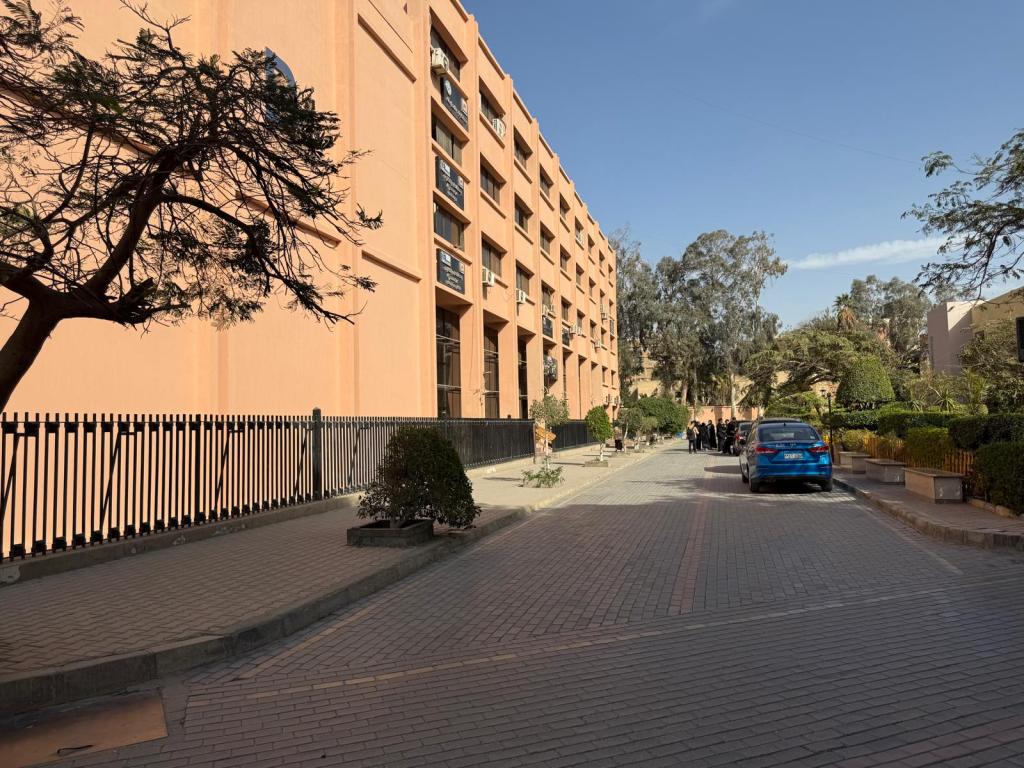
At first glance, it feels recognizable. There are lecture halls, although the classrooms look different, department offices which are shared by multiple faculty rather than individual faculty, meetings where every request was due yesterday, and students clustered around staircases discussing assignments (in my thinking) before and after class. Students gather in groups around campus. They submit assignments in a learning management system, and they mill about before and after class. All of which is universal academic behavior.
Some things transcend borders.
And yet, the deeper you look, the more you realize how much the surrounding culture shapes the structure of education.
In the U.S., universities often emphasize discussion-based classes, flexible assignments, and continuous assessment. Students expect interaction and at points demand it. Many have been trained to speak in class since elementary school if something is not presented in the desired way.
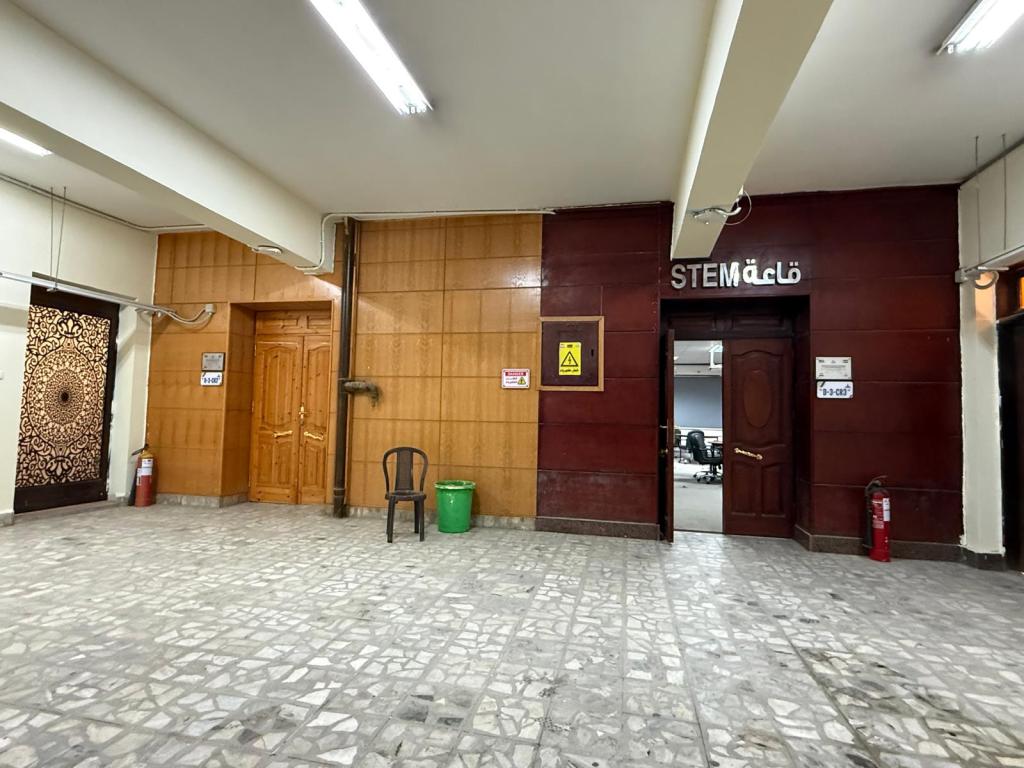
Here, many students have spent years learning within a highly structured educational system. While the STEM program is designed much like comparable programs in the United States, its intentionally integrated approach is unfamiliar to many of them. Colleagues have observed that students often try to identify “the science part” or “the math part” of a lesson, even when the instruction is purposefully presented as a connected, interdisciplinary whole.
During the first week, students arrived knowing varying amounts about what to expect. Some were aware there would be a foreign professor, while others discovered it only when class began. I am deeply grateful to my co-teaching colleagues, who have supported both the transition and translation. Their English is far stronger than my Arabic, yet we have all noticed that when trying to explain new ideas, each of us instinctively returns to our native language for clarity and comfort.
Students were regularly asked to explain and defend their thinking. Rather than offering quick opinions, they paused, reflected, and constructed responses grounded in reasoning and evidence. Interestingly, their answers rarely began with examples drawn from classroom observations. Instead, they worked deliberately to connect theory to practice, showing that they were actively trying to reconcile the ideas they were learning with how teaching actually occurs.
When responding to a question, many students stood at their seats before giving their answer. Curious about this, I asked whether it was a program requirement. I was told it was not; rather, it is a practice many of them learned in primary and secondary school, and it has simply carried forward as part of how they participate.
In the United States, I often find myself prompting students with “I can’t hear you” or “Could you speak up for the rest of the class?” Here, in the lessons and classes I have observed and joined, a sense of classroom presence is already established. It may need refinement, but it does not need to be built from the beginning.
Lessons to Ponder:
- Answering quickly is not the same as understanding deeply. Some systems train students to process ideas aloud; others train students to refine ideas before sharing them.
- At times, students are trained to move from theory to practice; in others, they move from experience to theory. Teacher preparation must explicitly teach the bridge. My preference is theory to practice as that does not simply replicate what has been the status quo.
- Language is not just a communication tool in education — it is a thinking tool. When instruction occurs in a second language, cognitive load is shared between understanding the idea and understanding the words.
- Educational systems teach students not only what to learn but how a learner should behave, and while this aspect has often been criticized within the US, I am not sure it should be, as society, business, future education, and other aspects of life do have expected forms of behavior.
The Hidden Curriculum
Every education system carries a hidden curriculum—the unspoken rules students absorb about what learning should look like, what counts as knowledge, and how they are expected to participate.
In the United States, students are often socialized to
- ask questions,
- challenge ideas,
- offer opinions, and
- construct meaning through discussion.
Here, students are more commonly taught to
- listen attentively,
- value expertise,
- respect established knowledge, and
- prepare carefully before speaking.
Neither approach is inherently better; each shapes how students understand their role as learners and how they enter a classroom conversation.
What struck me most was how quickly students adjusted once expectations were made explicit. Not in every moment, and not with every student, but with a consistency that was hard to ignore. When they understood that I was asking for reasoning rather than recall, the conversations changed. Their responses became thoughtful and deliberate—sometimes incorrect, but often more fully developed when encouraged to elaborate.
The experience made me remember something I often tell preservice teachers: silence does not necessarily signal disengagement. Sometimes it signals thinking. And sometimes our role as instructors is to make room for that thinking by allowing space for silence in the classroom.
Getting to Class Is Its Own Experience
In the U.S., students often arrive by car, on a campus shuttle, or on foot from residence halls.
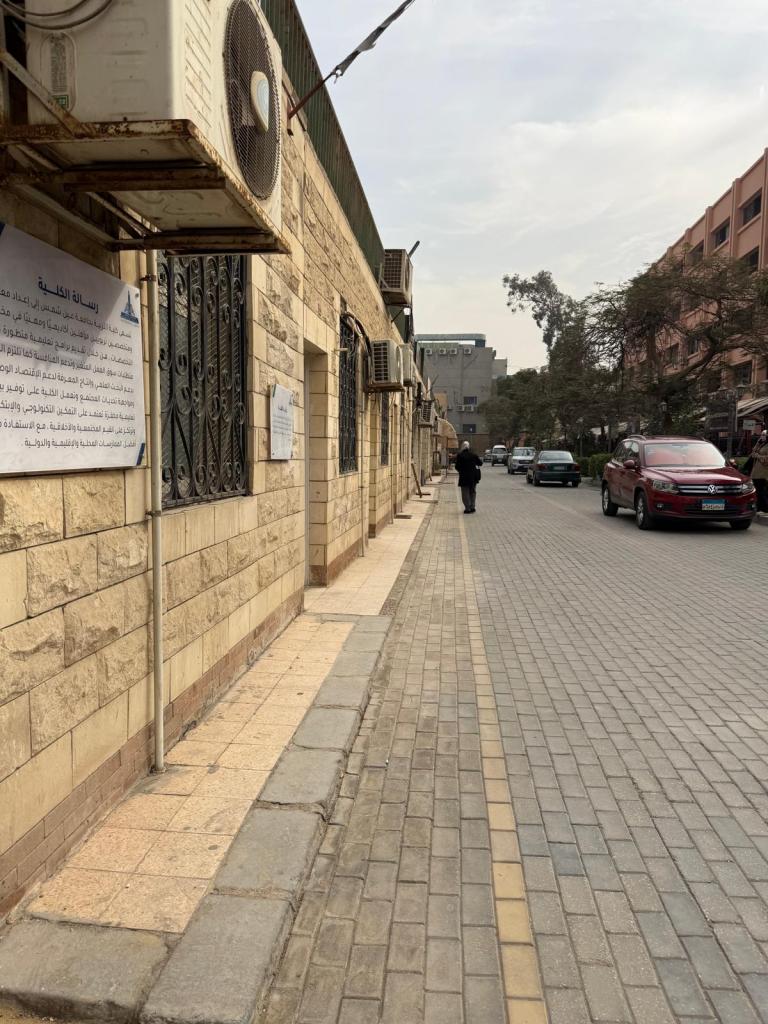
Here, getting to class can be an entire daily journey. Students commute from all over on buses, microbuses, metro trains, shared rides, taxis, and walking through dense city streets. A trip to campus may take an hour… or two… each way.
I realized quickly that attendance means something different when a student has already navigated half a city before 9:00 AM. One student asked me on Sunday how many steps I had in when she saw my watch. I shared with her the number, and she had outdone me by nearly 2500. This was repeated the next day, and again, I was left in the dust.
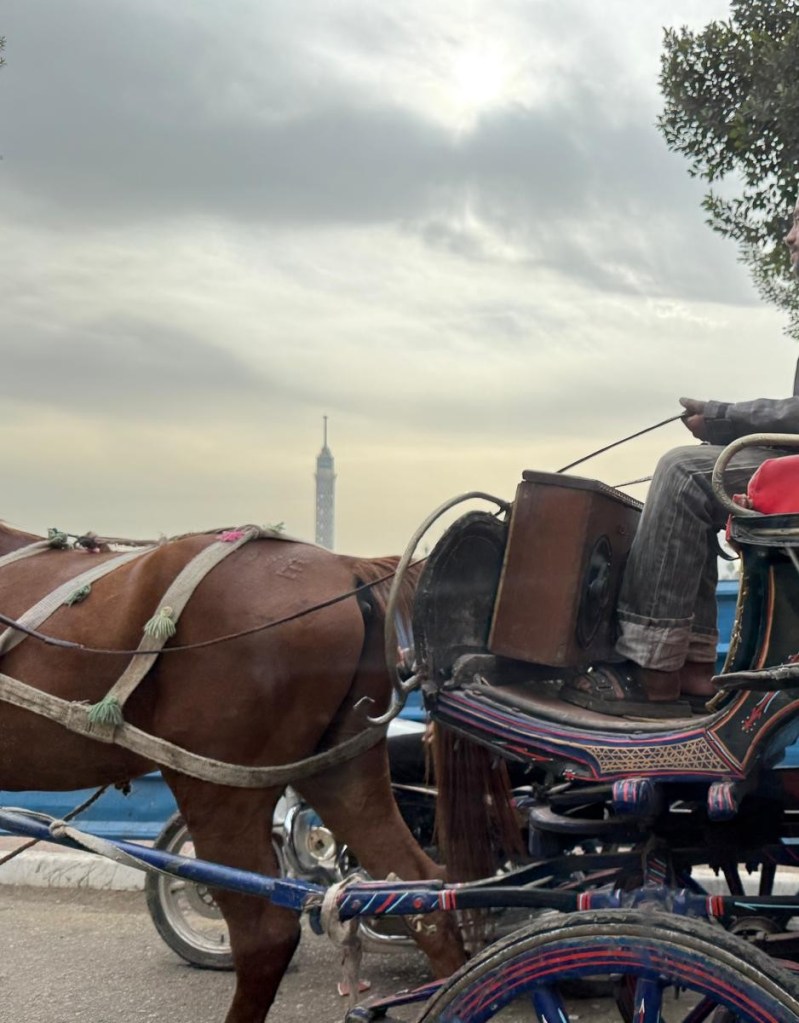
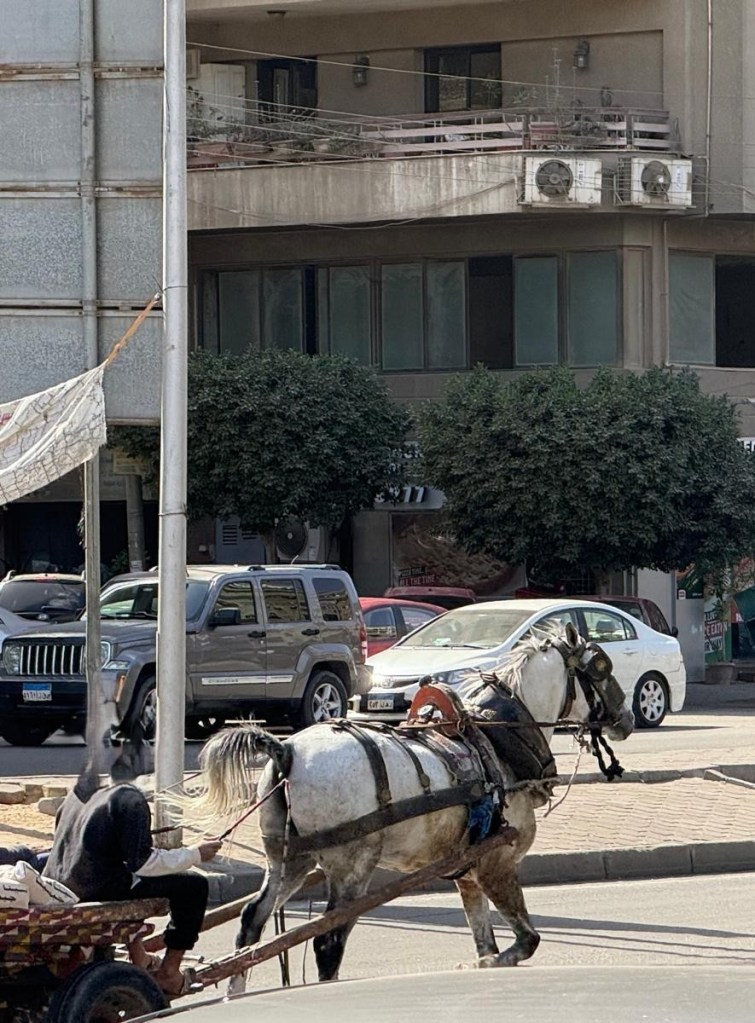
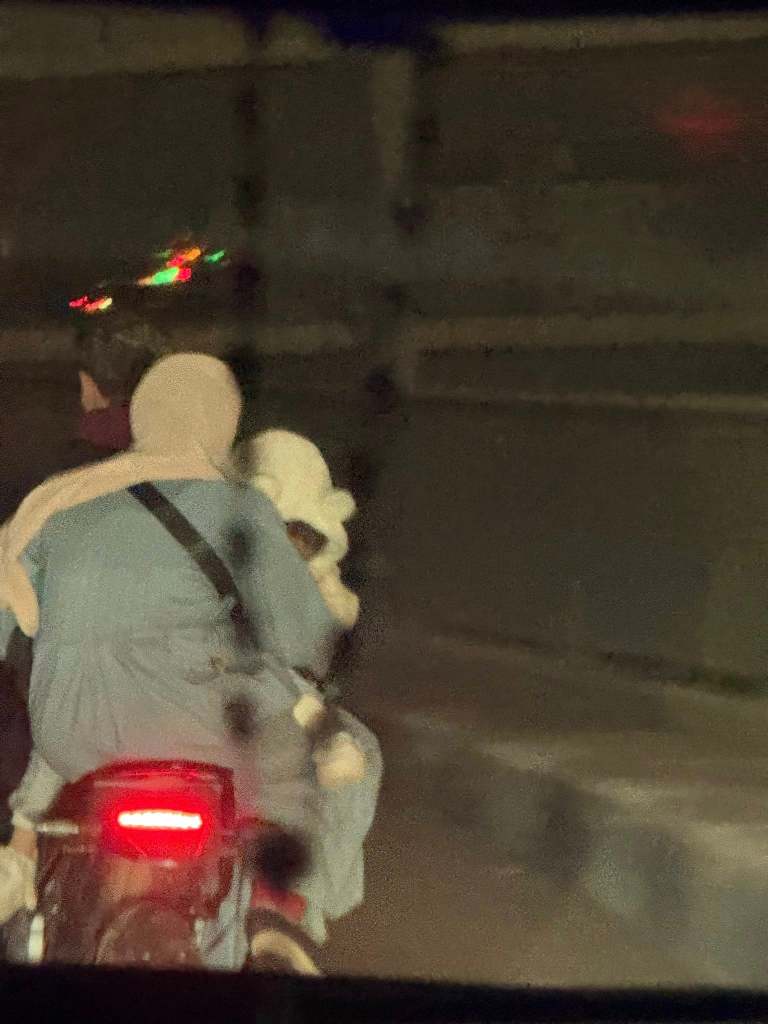
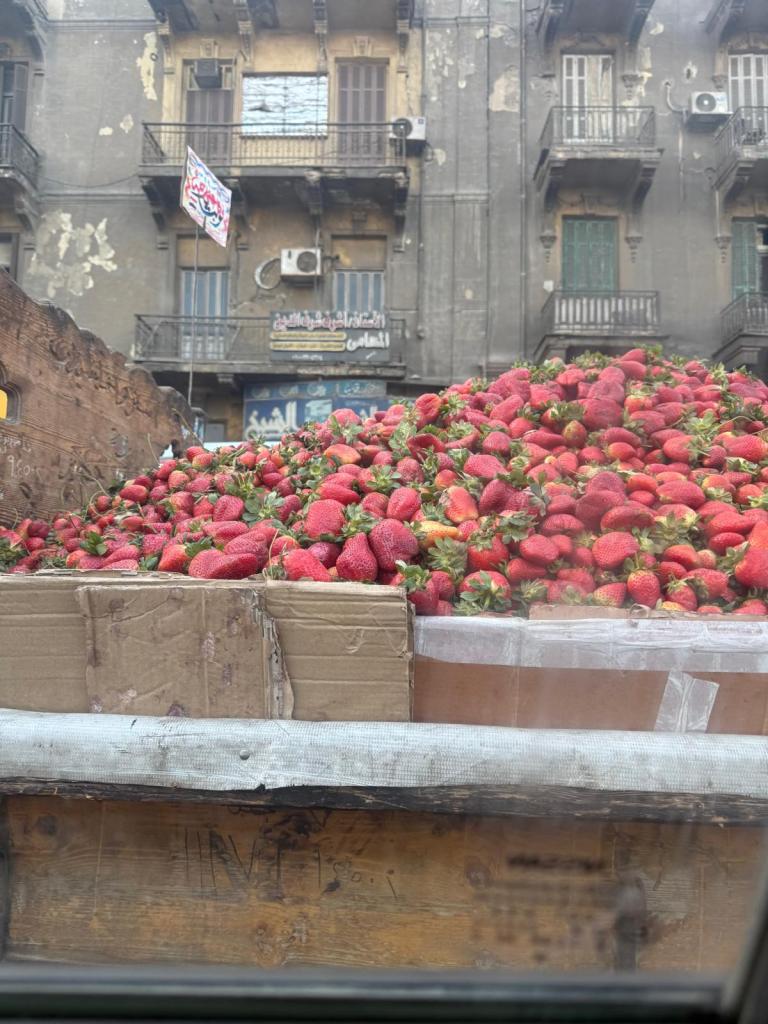
Transportation here is not just movement; it is a coordinated social system. Vehicles carry not only people but everything — furniture, produce, appliances, and sometimes items I could not immediately identify. Motorbikes transport the entire family on grocery trips. Carts move goods through narrow streets. Delivery happens in ways that look improvised but function with impressive efficiency.
The city is in constant motion. And yet, students arrive ready to learn.
It changed how I think about “preparedness.” Sometimes showing up is already a significant accomplishment.
A Trip Backward in Time
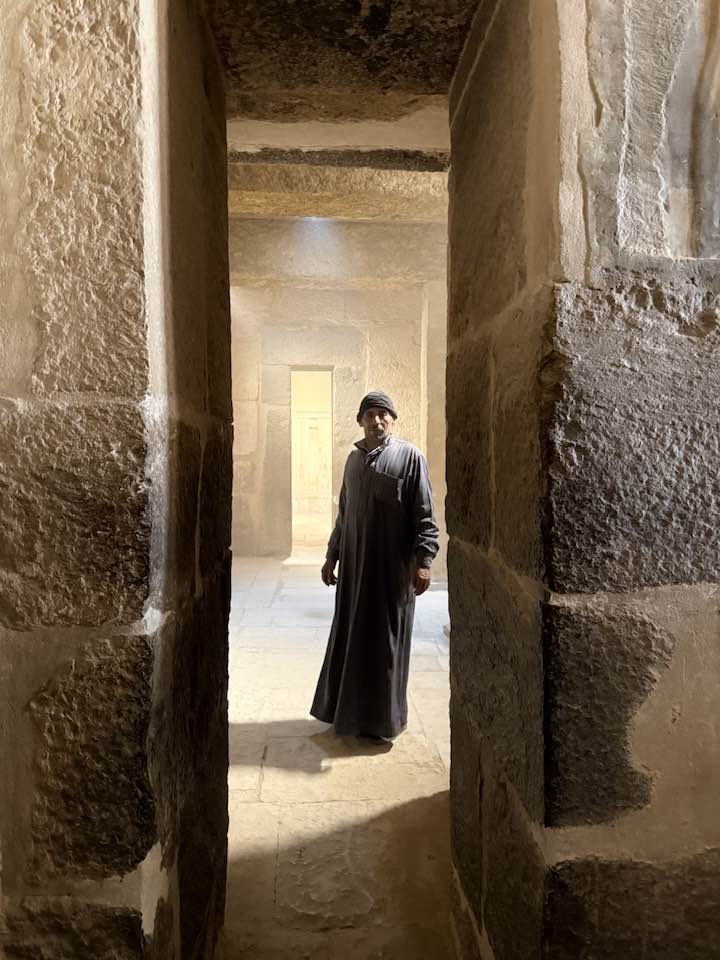
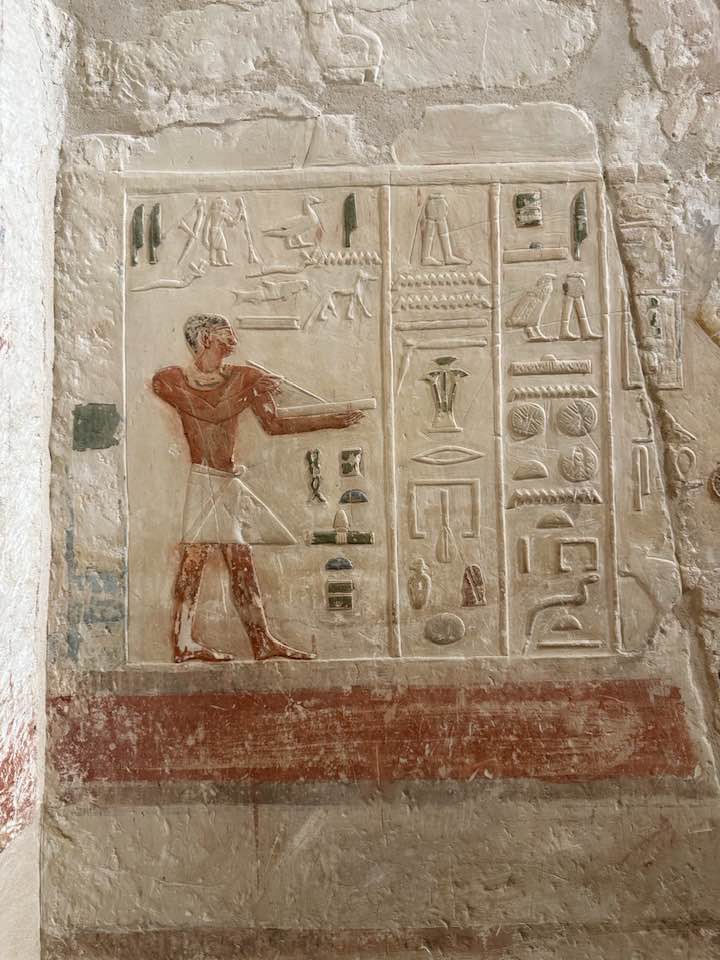
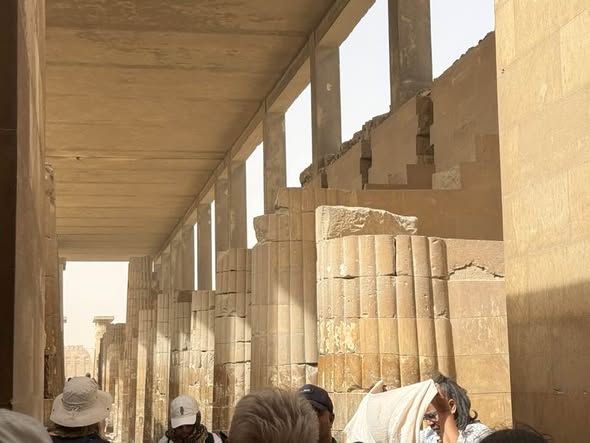
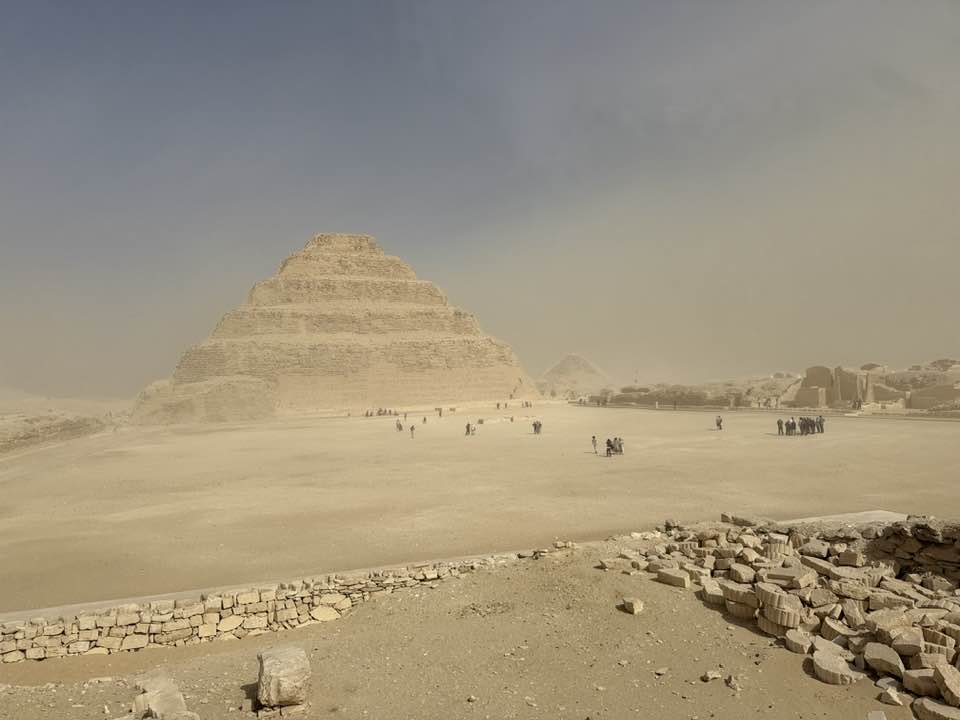
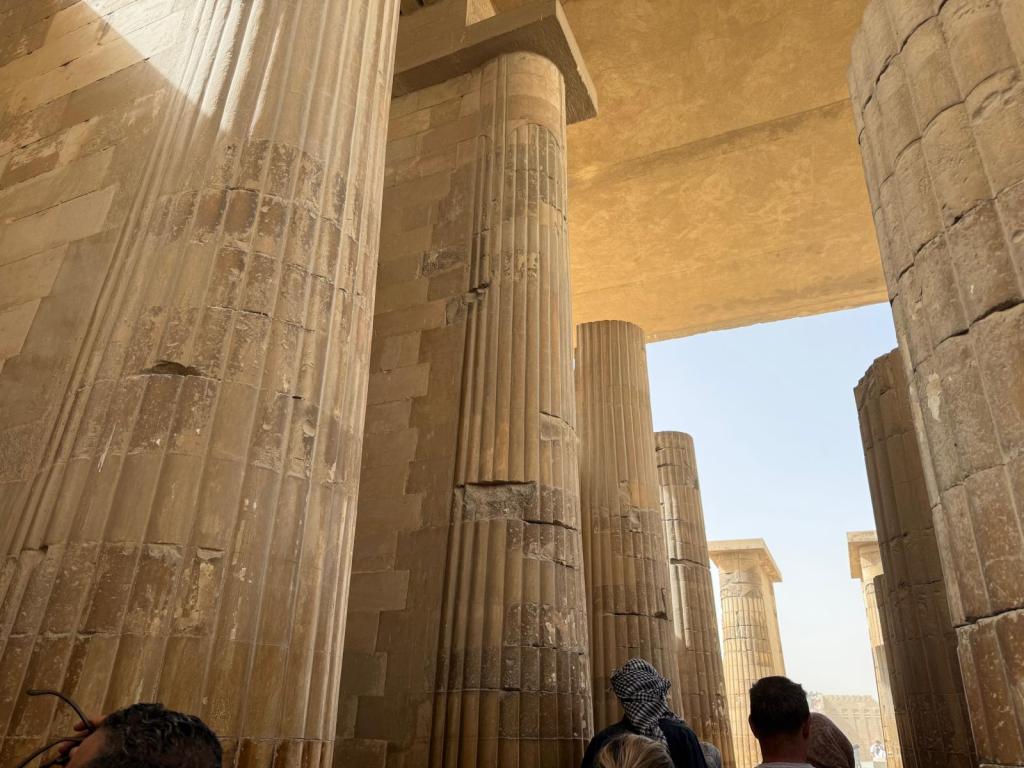
Then there was Saqqara. I joined colleagues from another institution on a day-long trip to Saqqara. These tombs are between 4500-4600 years old (that is not a typo) and have often been referred to as the Step Pyramids however, I learned that these were actually platforms where the dead was buried and the pyramid shape came from additional platforms being added on top of the previous one so they end up in a pyramid configuration but are not constructed as pyramids.
It is fair to say that I was NEVER a history person in school. While I could memorize whatever Mr. Grundman or Mr. Kelly wanted, I just didn’t enjoy the subject. Which brings me to my point, you can read about ancient civilizations your entire life and still not understand time until you stand inside it.
Saqqara is not simply an archaeological site; it is a place where history stops feeling abstract. The Step Pyramid of Djoser was built around 4,600 years ago. To put that in perspective: this structure was ancient when the Roman Empire existed.
I walked through corridors where workers carved stone by hand. I stood in chambers aligned with beliefs about the afterlife that shaped an entire civilization. The scale is difficult to grasp because the timeline is hard to follow.
Education often asks students to imagine history. Here, history is physically present.
I realized that students who grow up surrounded by antiquity may approach historical thinking differently from those who learn history primarily through textbooks, and that each country has its own history to teach, as well as global studies to be well-rounded. However, the past here is not distant; it is visible, accessible, and part of everyday geography.
Beyond visiting these locations in a decent sandstorm which, as one member on the trip said – made it all the more memorable, we had a Nile cruise to see the sights along the shore and a wonderful lunch comprised of many different Egyptian foods – some of which I would have said were Greek from the annual Greek festival in Scranton – for example, bechamel.
Everyday Life as Learning
The more time I spend here, the more I realize my learning is happening outside formal academic spaces.
- Buying bread.
- Learning to cross streets.
- Understanding bargaining etiquette.
- Observing how communities share public space.
These are not distractions from the Fulbright experience. They are the Fulbright experience.
Because teaching is not only about content knowledge. It is about understanding the lives students lead beyond the classroom. Culture shapes attention, communication, risk-taking, and even how students interpret instructions.
Every day, I notice small moments:
- people on the street greet each other regularly
- random strangers helping others even if it is to step off a rather high curb
- shops functioning as both businesses and social spaces
These interactions reveal something essential: even without invoking theories like Vygotsky or Bronfenbrenner, it becomes clear that learning is social in every context; it is simply expressed in different ways.
What I Am Beginning to Understand
I arrived expecting to compare education systems. Instead, I am learning how deeply education is embedded in daily life.
Universities are not isolated institutions; they mirror the transportation systems, family structures, communication patterns, histories, and shared beliefs about knowledge that surround them. Some operate with tighter and more consistent processes than others, but all are shaped by the contexts in which they exist. A classroom here and a classroom in Pennsylvania can teach the same content and still feel completely different, not because of the curriculum, but because of the context.
And yet, at their core, they are the same. Students want to succeed. Teachers want to help them succeed. Learning still depends on many aspects.
I am beginning to see that global education is not about finding which system works best. It is about understanding why each system works where it does and what we can learn from each other when we are willing to notice.
And sometimes, the most important lessons happen far beyond the lecture hall.
 Learning, Lessons, and Living